Reverse Osmosis vs Water Softener: What Each One Does (October 2026)
Reverse osmosis filters drinking water at a tap; a water softener reduces hardness across a home or a selected water line. They solve different water problems, so choose based on your water test and where you want treatment.
On this page (8 sections)
- Reverse osmosis vs water softener: what does each one treat?
- Which system treats more of the home?
- Which system should you choose for hard water?
- Can you use both systems together?
- What should you consider before installing either one?
- Which reverse osmosis system fits a drinking-water tap?
- How should you make the final choice?
- Sources
Reverse osmosis filters drinking water at a tap; a water softener reduces hardness across a home or a selected water line. In a reverse osmosis vs water softener comparison, the right choice depends on the problem in your water and how much of the home you want to treat.
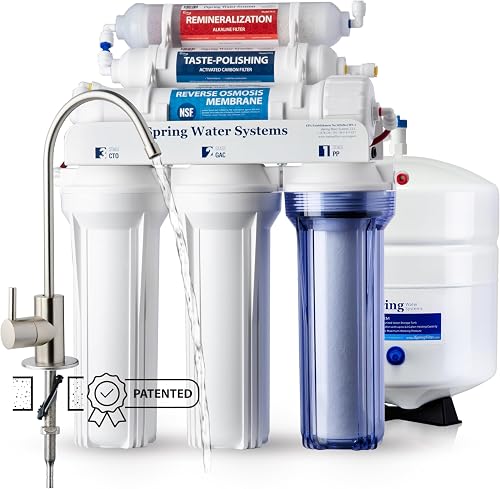
An under-sink RO system sends water through several filter stages and a semipermeable membrane. A conventional softener uses ion exchange to reduce calcium and magnesium, the minerals that make water hard.
These systems don't do the same job. You may choose one, the other, or both after testing your water and deciding where treatment is needed.

Reverse osmosis vs water softener: what does each one treat?
Reverse osmosis targets dissolved substances in water sent through its membrane; a softener targets hardness minerals. Their treatment goals overlap in a limited way, but neither is a substitute for the other in every situation.
Hard water contains calcium and magnesium. Those minerals can leave scale on fixtures and inside water-using appliances, and they can affect how soap lathers.
An RO membrane can reduce many dissolved substances in the water it processes. An under-sink RO unit, however, usually treats water only at its dedicated faucet, rather than every tap and appliance in the home.
A softener's ion exchange reduces calcium and magnesium. It doesn't serve as a complete drinking-water filter for concerns such as taste, chlorine or other contaminants.
What does reverse osmosis remove compared with a softener?
RO reduces substances based on the system's design and certification. Check the exact system's certified performance claims and the contaminants shown in your water test.
A softener is designed around hardness, not a broad contaminant list. It won't solve every concern just because the water feels different after treatment.
The NSF overview of water treatment systems explains how different filter types are evaluated. Match a system's claims to the specific contaminant or property you want to address.
Which system treats more of the home?
A whole-home softener can treat water entering multiple fixtures; an under-sink RO system treats water at one drinking-water outlet. Check the installation plan before comparing the systems by name alone.
A softener is commonly placed where the home's water line enters, but some setups treat only a branch line. The location and size determine which taps receive softened water.
Under-sink RO systems sit near the kitchen sink and connect to a dedicated faucet. Some can also supply an appliance such as a refrigerator, if the system supports that connection.
If you want filtered water for drinking and cooking, start with an under-sink reverse osmosis system guide. For other kitchen filter types, compare under-sink water filters that skip reverse osmosis.
When is a point-of-use filter enough?
A point-of-use RO system may fit if your concern is limited to water used for drinking and cooking at one sink. It doesn't protect water heaters, showers or other fixtures from hard-water scale.
Choose the scope that matches your goal. Treating one tap costs less space across the home, while whole-home treatment addresses water going to more fixtures.
Which system should you choose for hard water?
Choose a softener when a water test confirms hardness and you want to reduce its effects across the home. Choose RO when you want additional treatment for drinking water at a specific tap.
Hardness and contamination are separate questions. Hardness by itself doesn't show that water is unsafe, and clear water doesn't prove that it is free of contaminants.
Get a water test suited to your source and concerns. If you're on a private well, review the under-sink water filter guide for well water and use a test to choose treatment for the actual findings.
Can reverse osmosis replace a water softener?
An under-sink RO system doesn't replace a whole-home softener for scale control. It treats only the water routed through that system, and its purpose is drinking-water filtration.
Some RO systems can reduce hardness minerals in the treated water. That doesn't mean they protect plumbing and appliances throughout the home.
Can a softener replace reverse osmosis?
A softener doesn't replace RO when your goal is to reduce other dissolved substances at a drinking tap. It is designed to reduce hardness, not provide broad filtration.
Check what the water test finds and what a system is certified to reduce. If taste, odor or a named contaminant is the concern, choose treatment for that concern rather than assuming a softener will handle it.
Can you use both systems together?
You can use a softener for hardness and RO at the drinking tap when both needs are confirmed. The systems serve different parts of the water-treatment plan.
In some plumbing layouts, softened water feeds an RO unit. This can reduce hardness entering the membrane, but the correct setup depends on the equipment instructions and local water conditions.
Don't add either system simply because it is often paired with the other. Test the water, confirm the treatment goals, then check installation requirements and ongoing filter or salt needs.
For a kitchen-only RO choice, compare a tank RO system with a tankless RO system. Tank and tankless designs both treat a dedicated tap, but their cabinet layouts differ.
What should you consider before installing either one?
Check your water test, available space, plumbing and maintenance needs before choosing equipment. Installation limits can rule out a system even when its treatment goal is right.
A softener may need room for its mineral tank and brine tank, along with access for salt and service. An RO system needs under-sink space for its filters, connections and, for tank models, storage tank.
RO systems also send some water to a drain during operation. Read about why reverse osmosis systems waste water before deciding whether that tradeoff fits your kitchen.
Follow the manufacturer instructions for installation and service. If you aren't sure how your plumbing should be configured, ask a qualified installer to review the plan.
Which reverse osmosis system fits a drinking-water tap?
Choose an RO system by cabinet space, tank preference and the features you want at the tap. These options treat drinking water and don't replace a whole-home softener.
How should you make the final choice?
Pick a softener for confirmed hardness across the home, and pick reverse osmosis for additional treatment at a drinking-water tap. Choose both only when your test and treatment goals call for both.
Start with the water test, then decide whether the concern affects one tap or several fixtures. For RO, compare tank and tankless layouts; for hardness, confirm that a softener is sized and installed for your home.
If you need filtration at a drinking tap, see our under-sink reverse osmosis buyer's guide. If scale is the main concern, use test results to plan a softener for the affected water line.
Sources
Frequently asked questions
Does reverse osmosis remove water hardness?
Reverse osmosis can reduce dissolved minerals that contribute to hardness in the water it treats, but an under-sink RO system serves a drinking-water outlet rather than the whole house. For hard-water effects on plumbing and appliances, consider a properly sized softener and confirm the cause with a water test.
Does a water softener filter drinking water?
A conventional water softener reduces hardness by exchanging calcium and magnesium ions for sodium or potassium ions. It isn't a general-purpose drinking-water filter, so it won't address every contaminant or taste concern.
Use test results to decide whether you also need a separate drinking-water treatment.
Can you use reverse osmosis and a water softener together?
Yes. A softener can treat hard water for the home, while an under-sink reverse osmosis system treats water at a drinking tap.
The right setup depends on your water test, plumbing and treatment goals; follow each system's instructions for placement and maintenance.
Which should you install first, a softener or reverse osmosis?
If both are suitable, a common arrangement is to soften the home's water before it reaches an RO system, then use RO at the drinking tap. Confirm the required order with the system manuals or a qualified water-treatment professional, since plumbing layouts and water conditions differ.
How do you know whether your water is hard?
A water test can measure hardness and help identify other issues that may need treatment. Soap that lathers poorly or mineral scale can be clues, but they don't tell you the hardness level or rule out other causes.
Test the water before choosing equipment.