8 Best Under Sink Reverse Osmosis Systems With a Tank (October 2026)
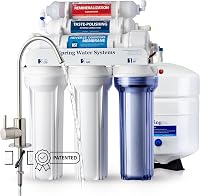
The best under sink reverse osmosis systems with a tank include the iSpring RCC7AK-BN for mineralized water, the APEC ROES-50 for a simple 5-stage setup, and the APEC ROES-PH75 for added calcium minerals.
On this page (7 sections)
- How we chose the best under sink reverse osmosis systems
- Compare tank reverse osmosis systems by capacity and features
- Which tank RO system fits your kitchen?
- How much cabinet space does a tank RO system need?
- Does higher GPD mean a tank fills faster?
- How should you plan for filter changes?
- Which under sink reverse osmosis system should you choose?
The iSpring RCC7AK-BN is the best under sink reverse osmosis system with a tank for most kitchens, combining a full-system NSF/ANSI 58 certification, a mineral stage and a top-mounted faucet fastener. The APEC ROES-50 is a simpler 5-stage choice, while the Home Master TMAFC-ERP stands out for its permeate pump and two-pass mineral addition.
A tank system stores filtered water for use at a dedicated faucet, but that tank takes up cabinet space alongside the filter assembly. Measure both areas before you choose, and leave enough access to change filters and reach the shutoff valve.
If you're still deciding whether a tank suits your sink, start with our under sink reverse osmosis buyer's guide. It explains the main parts and the questions to ask before comparing models.
Our picks at a glance
-
1
-
2

-
3

How we chose the best under sink reverse osmosis systems
The best under sink reverse osmosis systems with a tank should match your cabinet, preferred filtration setup and upkeep needs. We compared the stated capacity, stages, included parts, certifications, mineral features and filter intervals in the product information.
We gave the highest score to the iSpring RCC7AK-BN because its combination of a tank, system-level NSF/ANSI 58 certification, mineral stage and top-mounted faucet fastener fits a broad range of buyers. Other picks rank for a more specific need, such as higher stated capacity, a spare filter set or reduced drain water.
A capacity number does not predict the exact time needed to fill a tank in every home. Incoming pressure, water conditions and the system's setup matter, so use the stated operating range and installation instructions when comparing options.
Our score weighs specs, features and buyer feedback against what you're shopping for. We did not treat rated capacity or brand filtration claims as a promise of the same results in every home.
Compare tank reverse osmosis systems by capacity and features
These models range from 50 to 100 GPD where a capacity is stated, and they vary in stages, mineral treatment and included features. Check the full assembly and tank dimensions before making a cabinet-fit decision.
| Product | Best for | Rated capacity | Stages | System size | Our score |
|---|---|---|---|---|---|
| iSpring RCC7AK-BN | mineralized water | 75 GPD | 6 | 15.5 x 16 x 18 in | 9.1 |
| APEC ROES-50 | a simple 5-stage setup | 50 GPD | 5 | 15.5 x 5.25 x 17 in | 8.9 |
| APEC ROES-PH75 | added calcium minerals | 75 GPD | 6 | 15.5 x 5.25 x 17.5 in | 8.4 |
| Home Master TMAFC-ERP | reduced drain water | 7 | 20 x 16 x 12 in | 8.3 | |
| iSpring RCC7-BN | standard 5-stage filtration | 75 GPD | 5 | 23.62 x 15.75 x 11.81 in | 8.1 |
| Express Water RO5DX | a spare filter set | 50 GPD | 14 x 5 x 15 in | 7.8 | |
| APEC RO-90 | higher stated capacity | 90 GPD | 5 | 16 x 5.25 x 17.5 in | 7.6 |
| Express Water ROALK10D | multiple mineral stages | 100 GPD | 10 | 15 x 5 x 17 in | 7.4 |
Which tank RO system fits your kitchen?
The right system depends on what you value most: a mineral stage, a simpler filter layout, a pump feature or higher stated capacity. Each option below has a different reason to make the shortlist.
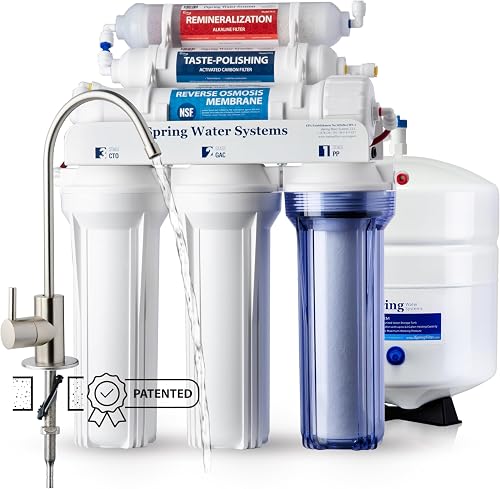
iSpring RCC7AK-BN: Best for mineralized water
- 75 GPD
- 6-stage filtration
- NSF/ANSI 58 certified system
- Mineral AK stage
- Top-mounted faucet fastener
This tank system adds a mineral stage and has a top-mounted faucet fastener for countertop installation from above. Its transparent first-stage housing makes it easier to check sediment buildup.
Pros
- NSF/ANSI 58 certification for the full system
- Top-mounted faucet fastener
- Transparent first-stage housing
Cons
- The 18-inch height needs a cabinet measurement
- Mineralization is an extra stage to consider when comparing replacement filters
The iSpring RCC7AK-BN is a strong match if you want RO filtration with a mineral stage and a system-level certification. iSpring says the full system is certified to NSF/ANSI 58, and describes its mineral AK stage as delivering water with a balanced pH and multiple minerals.
Its top-mounted fastener allows you to secure the faucet from above the counter. That can help during installation when reaching the underside of the sink is awkward.
A transparent first-stage housing makes it easier to see sediment buildup. The system's stated dimensions are 15.5 x 16 x 18 inches, so check the cabinet height as well as the footprint.
Choose it if you want its combination of certification, mineral stage and faucet design. If you'd rather compare it directly with another tank favorite, see our iSpring RCC7AK-BN vs APEC ROES-50 comparison.
APEC ROES-50: Best for a simple 5-stage setup
- 50 GPD
- 5-stage filtration
- Tank and brushed nickel faucet included
- Quick connection fittings
- 40–85 psi operating range
The ROES-50 keeps the setup to 5 stages and includes a tank, faucet, installation kit and filter set. APEC recommends filter changes every 6–24 months based on incoming water quality.
Pros
- Tank and faucet included
- Quick connection fittings and colored tubing
- Filter replacement interval tied to source water quality
Cons
- 50 GPD is the lowest stated capacity among these picks
- Cabinet dimensions for the separate tank need checking
The APEC ROES-50 suits buyers who want a straightforward 5-stage system with a tank and faucet included. Its stated capacity is 50 GPD, and the package includes a filter set, installation kit and instructions.
Quick connection fittings and colored tubing are designed to make setup and service easier to follow. APEC recommends replacing filters every 6–24 months, depending on incoming water quality.
The listed assembly dimensions are 15.5 x 5.25 x 17 inches, but those do not include the separate tank. Measure the tank location and tubing path too, especially if the cabinet already holds a disposal or pull-out bins.
Pick the ROES-50 if you prefer a 5-stage layout without an added mineral stage. Our tank RO comparison can help you sort through other system differences.
APEC ROES-PH75: Best for added calcium minerals
- 75 GPD
- 6-stage filtration
- Calcium mineral cartridge
- 40–85 psi feed pressure
- WQA certified system
The ROES-PH75 adds calcium minerals after filtration for buyers who want a mineral stage. It includes a tank, faucet, tubing, drain saddle and feed-water adapter.
Pros
- Calcium mineral stage
- 75 GPD stated capacity
- WQA certified system
Cons
- Confirm room for both system and tank
- Added minerals may not suit buyers who prefer unmineralized RO water
The APEC ROES-PH75 adds a calcium mineral cartridge after RO filtration. It has a stated capacity of 75 GPD, uses 6 stages and includes a tank, faucet, tubing, drain saddle and feed-water adapter.
APEC describes the mineral cartridge as a way to add calcium and improve alkalinity. Its system is WQA certified, and the stated feed-water pressure range is 40–85 psi.
Its assembly measures 15.5 x 5.25 x 17.5 inches, before accounting for the tank. Choose it if the mineral stage is a priority, and compare its filter schedule and replacement costs with the other systems before deciding.
Home Master TMAFC-ERP: Best for reduced drain water

- 7-stage filtration
- Non-electric permeate pump
- Patented two-pass remineralization
- 1:1 waste ratio stated
- 2,000-gallon filter interval
This tank system pairs a non-electric permeate pump with two-pass remineralization. Home Master says the pump reduces water waste by up to 80%, and gives a 1:1 waste ratio as a product feature.
Pros
- Non-electric permeate pump
- Minerals added twice during purification
- Modular filters designed for changes without wrenches
Cons
- The 20-inch length needs cabinet planning
- The published capacity is a 2,000-gallon filter interval, not a GPD figure
The Home Master TMAFC-ERP is the standout for buyers who want a permeate pump and remineralization during two points in the purification process. Home Master says its non-electric pump can reduce water waste by up to 80%, while the stated product feature gives a 1:1 waste ratio.
Its 7-stage design adds calcium and magnesium twice, according to Home Master. The modular filter assembly is designed for a once-a-year or 2,000-gallon change interval, with filter changes that do not require wrenches.
The assembly measures 20 x 16 x 12 inches and comes with a storage tank. Check the width and depth carefully, since its longer assembly may compete with other under-sink items.
Choose it if the pump and two-pass remineralization fit your priorities. For broader ownership costs, read our guide to what a reverse osmosis system costs to own.
iSpring RCC7-BN: Best for standard 5-stage filtration

- 75 GPD
- 5-stage filtration
- NSF/ANSI 58 certified
- No power needed
- Transparent first-stage housing
The RCC7-BN is a 5-stage tank system with a stated 75 GPD capacity and NSF/ANSI 58 certification. Its transparent first-stage housing lets you visually check the sediment filter.
Pros
- NSF/ANSI 58 certified
- No power needed
- Transparent sediment-filter housing
Cons
- Longer stated system dimensions need checking
- Does not add a mineral stage
The iSpring RCC7-BN keeps the design to 5 stages and includes a tank, faucet and filter assembly. Its stated capacity is 75 GPD, and iSpring says the system is NSF/ANSI 58 certified.
The transparent first-stage housing gives you a quick visual check of the sediment filter. The system requires no power, which keeps it independent of an outlet under the sink.
Its dimensions are 23.62 x 15.75 x 11.81 inches, so compare those measurements with your cabinet before ordering. This model does not list a mineral stage, making it a better match for buyers who want standard RO filtration.
Express Water RO5DX: Best for a spare filter set

- 50 GPD
- 5-stage filtration
- 4-gallon storage tank
- Extra filter set included
- No power needed
The RO5DX includes a 4-gallon tank and an extra filter set, which gives you replacement filters to keep on hand. Express Water says the system needs no electricity.
Pros
- Extra filter set included
- 4-gallon tank
- No power needed
Cons
- 50 GPD stated capacity
- Check room for the tank as well as the compact filter unit
The Express Water RO5DX includes a 4-gallon storage tank and an extra filter set. Its stated capacity is 50 GPD, and the 5-stage system requires no power.
Express Water says the quick-connect design is intended for DIY installation, and the system includes a leak detector. Its product information also describes the tank as holding 3.2 gallons of water, so use that figure when thinking about stored water rather than the tank's 4-gallon size.
The filter assembly measures 14 x 5 x 15 inches. Remember to plan separate room for the tank, and review the installation steps before deciding whether you want to do the work yourself.
APEC RO-90: Best for higher stated capacity

- 90 GPD
- 5-stage filtration
- Tank, faucet and installation parts included
- WQA Gold Seal certified
- 40–85 psi operating range
The RO-90 has the highest stated GPD capacity in this group and includes a tank, faucet and installation parts. APEC says its larger filters are designed for fewer change-outs than smaller all-in-one filters.
Pros
- Highest stated capacity in this roundup
- WQA Gold Seal certified
- Tank and faucet included
Cons
- Confirm space for the separate tank
- Higher GPD alone does not tell you how quickly the tank refills in your home
The APEC RO-90 has a stated capacity of 90 GPD, the highest among the systems here with a published GPD figure. It uses 5 stages and includes a tank, faucet, tubing, drain saddle, feed-water adapter and wrenches.
APEC says its filters have larger capacity than smaller all-in-one filters and are designed for fewer changes. The system is WQA Gold Seal certified, and its stated operating pressure range is 40–85 psi.
Its assembly measures 16 x 5.25 x 17.5 inches. Consider it if capacity is a priority and your home falls within the pressure range, but remember that tank fill time varies with the setup and incoming water conditions.
Express Water ROALK10D: Best for multiple mineral stages
- 100 GPD
- 10-stage filtration
- 5 stages of mineralization
- Leak-stop detector
- Tank included
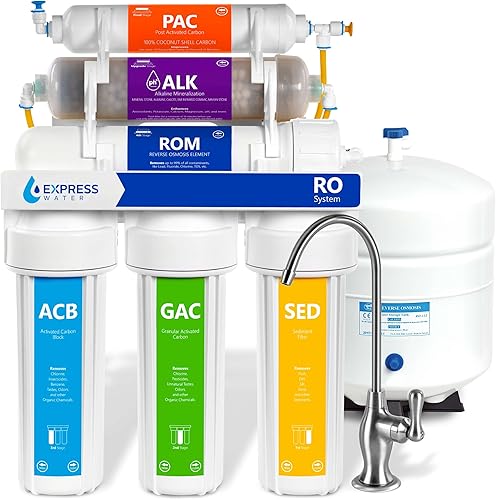
The ROALK10D combines 5 RO stages with 5 mineralization stages and includes a tank. It also has a leak detector that Express Water says shuts off water flow when it detects moisture.
Pros
- 100 GPD stated capacity
- Multiple mineralization stages
- Leak detector included
Cons
- More stages mean more filters to account for
- Check whether the added minerals match your taste preference
The Express Water ROALK10D combines 5 RO stages with 5 mineralization stages, for 10 stages in total. Its stated capacity is 100 GPD, and it includes a tank and a leak-stop detector.
Express Water says the detector shuts off water flow when it senses moisture. The system also allows add-on filtration attachments, including UV and deionization options, according to the product information.
The assembly dimensions are 15 x 5 x 17 inches, before the tank. Choose it if you want multiple mineral stages and the leak detector, and make sure the added stages match the filtration and maintenance routine you want.
How much cabinet space does a tank RO system need?
A tank RO system needs room for the filter assembly, the separate tank, tubing and regular filter access. The system dimensions in a comparison table usually describe the assembly, so check tank dimensions separately when available.
Measure around the drain, disposal, shutoff valves and any pull-out storage. Leave space to remove filter housings or modules, and make sure you can still reach the faucet connections without moving the whole system.
If the cabinet is tight, compare a tankless setup in our best tankless reverse osmosis systems guide. Tankless units use a different layout, so check their own dimensions and power needs.
Does higher GPD mean a tank fills faster?
A higher GPD rating indicates a higher stated daily production capacity under specified conditions, but it does not tell you exactly how fast the tank will fill in your kitchen. Water pressure, temperature and source-water conditions can affect actual output.
For example, the APEC RO-90 states 90 GPD, while the APEC ROES-50 states 50 GPD. Compare the operating pressure ranges, then use the manufacturer's installation and use guidance for your home's conditions.
If your system already runs slowly or the tank stays low, our guide to low reverse osmosis water pressure walks through common causes. A tank not filling troubleshooting guide can help narrow down the next checks.
How should you plan for filter changes?
Plan filter changes around the system's schedule and your incoming water quality. APEC gives a 6–24 month recommendation for the ROES-50 based on water quality, while Home Master specifies once a year or 2,000 gallons for the TMAFC-ERP.
Keep the exact model and replacement-filter names with your household records. For a maintenance overview, see how often to change reverse osmosis filters, then follow the schedule for the system you choose.
Which under sink reverse osmosis system should you choose?
Choose the iSpring RCC7AK-BN if you want a tank system with a mineral stage, system-level NSF/ANSI 58 certification and a top-mounted faucet fastener. Pick the APEC ROES-50 for a simpler 5-stage design, or the Home Master TMAFC-ERP if its permeate pump and two-pass mineralization suit your priorities.
If cabinet space is the deciding factor, measure the filter assembly and tank together before you buy. For a closer look at the main system parts, continue to our under sink reverse osmosis guide.
Our top 3 picks at a glance
-
1
-
2
-
3
Frequently asked questions
What should I check before buying an under sink reverse osmosis system with a tank?
Measure the cabinet for both the filter assembly and the separate storage tank, then check for room to reach the filters and shutoff valve. Confirm your water pressure falls within the system's stated range, and review which replacement filters it needs.
A published GPD figure is a rated capacity, not a guarantee of your home's daily output.
Is a tank reverse osmosis system a good fit for a small cabinet?
It can fit if the cabinet has room for the filter assembly, storage tank, tubing and access for maintenance. Measure around the disposal, plumbing and cleaning supplies before choosing a model.
If you cannot spare room for a tank, compare the options in our tankless RO guide.
Do all reverse osmosis systems add minerals?
No. The iSpring RCC7AK-BN and APEC ROES-PH75 include mineral stages, and Home Master TMAFC-ERP adds minerals twice during purification.
The other picks here focus on RO filtration without a stated mineral stage.
Choose based on whether you want remineralized water and the extra filter upkeep that comes with it.
How often do tank RO filters need to be changed?
It depends on the system, filter type and incoming water. APEC recommends changes every 6–24 months for the ROES-50 based on water quality, while Home Master gives once a year or 2,000 gallons for the TMAFC-ERP.
Use the specific filter schedule for your model, and see our guide to reverse osmosis filter changes.