How Much Does a Reverse Osmosis System Cost to Own?
A reverse osmosis system’s total ownership cost includes the unit, installation, replacement filters, and water sent to the drain. Filter schedules, water use, and whether you install it yourself shape the ongoing cost.
On this page (9 sections)
- What does a reverse osmosis system cost to own?
- Which costs are upfront, and which come later?
- How much do replacement filters add?
- Does a tankless system save money over time?
- How can you compare systems fairly?
- Which ownership costs are easy to overlook?
- How long should you expect to own the system?
- How much does a reverse osmosis system cost to own in practice?
- Which reverse osmosis ownership costs should you budget for?
A reverse osmosis system’s ownership cost includes the unit, installation, replacement filters, and water sent to the drain. Filter schedules, water use, and whether you install it yourself determine how much the system costs over time.
A low purchase price can hide frequent filter changes or installation work. A higher initial cost may suit you if its layout and upkeep fit your kitchen, but compare the full set of costs before choosing.
What does a reverse osmosis system cost to own?
Add the upfront system cost, installation, replacement parts, and water use to estimate total ownership cost. The exact amount depends on the model, local labor rates, your household’s filtered-water use, and the maker’s maintenance schedule.
Use this simple checklist:
- System purchase cost
- Installation labor or tools and fittings
- Replacement prefilters, postfilters, and membrane
- Water sent to the drain during filtration
- Any electricity needed by the system
- Repair or replacement costs over its useful life
System prices and local service rates change, so check current amounts when you compare options. This guide focuses on the cost categories you can use to compare systems rather than quoting a price that may soon be out of date.
Which costs are upfront, and which come later?
The system and installation are usually upfront costs; filters and water use recur. Check what comes in the box and whether the system needs power, a faucet hole, or plumbing changes before you decide.
Does installation change the total cost?
Installation cost depends on your sink, plumbing, tools, and comfort with the work. A system that fits an existing faucet opening may require less modification than one that calls for drilling a new hole.
For a tank system, allow space under the sink for the unit and storage tank. Tankless models may free up cabinet room, but some need under-sink electricity and a countertop hole for the faucet.
If you plan to install the system yourself, read the instructions and check the cabinet dimensions first. Our guide to installing an under-sink reverse osmosis system walks through the main steps.
What should you count as a recurring cost?
Count every filter and membrane replacement, plus the water that goes to the drain. An RO system can send more water to the drain than it produces as filtered water, and the ratio can depend on water pressure and incoming-water quality.
The Express Water RO5DX comes with an extra filter set, which can reduce the number of parts you need to buy at the start. Express Water says its system uses no electricity, while the Waterdrop G3P600 requires under-sink electricity.
Include water use in your estimate if your utility charges by volume. Our guide to why reverse osmosis systems waste water explains what affects drain flow and how to compare system ratios.
How much do replacement filters add?
Filter costs depend on the system and how often each part needs replacing. Check the price and schedule for every filter and membrane, not just the first replacement set.
APEC recommends changing the ROES-50 filter set every 6–24 months based on incoming water quality. That wide range shows why your home's water and the maker's schedule matter when you estimate ongoing costs.
Waterdrop says the G3P600 has a filter-life tracker on its display faucet. A reminder can help you plan maintenance, but you still need to check the replacement parts and schedule for the exact model.
Set a calendar reminder or follow the system's filter indicator. For more on timing, read how often to change reverse osmosis filters and when to replace an RO membrane.
Does a tankless system save money over time?
A tankless design can save cabinet space, but it doesn't guarantee a lower ownership cost. Compare filter prices, replacement intervals, power needs, and water ratios alongside the purchase price.
The Waterdrop G5P500A is a tankless system with an alkaline stage and a stated 2:1 pure-to-drain ratio. It also needs electricity, and the maker says its faucet requires a countertop hole.
The Waterdrop G3P600 also has a stated 2:1 ratio and requires under-sink electricity. Its filter-life tracker can show when a change is approaching, but the replacement schedule and filter costs still belong in your budget.
A tank model may suit you better if you want a storage tank and a system that does not require electricity. Compare tank and tankless reverse osmosis systems to see which setup fits your cabinet and routine.
How can you compare systems fairly?
Compare the same cost categories for each system over the same time period. A simple table can keep a low upfront cost from overshadowing replacement parts or water use.
| Cost factor | What to check |
|---|---|
| Purchase | Current system price and included filters |
| Installation | Faucet hole, drain connection, power, and labor |
| Filters | Replacement parts, prices, and schedules |
| Water | Pure-to-drain ratio and local water charges |
| Fit | Cabinet space, tank size, and household demand |
Use the same time span, such as the first year, when comparing systems. For a longer view, add recurring filter purchases and water costs for each year you expect to keep the system.
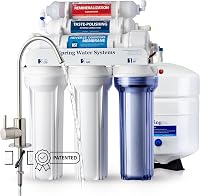
The APEC ROES-50 and Express Water RO5DX are tank-style options. The Waterdrop G5P500A and G3P600 are tankless, and both makers state a 2:1 pure-to-drain ratio.
Which ownership costs are easy to overlook?
The most easily missed costs are labor, faucet changes, electricity, and water sent to the drain. Check these before choosing a system, especially if the sink area needs changes to fit it.
A tankless model may require an outlet in the cabinet. A faucet may need a new hole, and a drain connection may need a compatible fitting; ask an installer about your sink if you're unsure.
Filter schedules can differ by water quality and use. If the system produces less water than expected, check the instructions and your setup before assuming the system itself is the problem.
For tank-system upkeep, see how to check reverse osmosis tank pressure and why an RO tank may stop filling. These guides can help you identify routine checks before calling for service.
How long should you expect to own the system?
Estimate ownership cost over the years you expect to keep the system, including maintenance and eventual replacement. A system's lifespan varies with its parts, water conditions, maintenance, and use.
Don't treat a long service life as guaranteed savings. Compare the expected filter and membrane schedule with the cost of replacing the system, and follow the maker's maintenance instructions.
If you're deciding whether an older system is worth maintaining, read how long reverse osmosis systems last. That can help frame repair and replacement choices alongside your cost estimate.
How much does a reverse osmosis system cost to own in practice?
Choose the system whose purchase, installation, filters, and water use fit your household budget. A tank model may appeal if you want a storage tank and no electricity; a tankless model may suit a tight cabinet if power and faucet installation work for you.
For a tank system with an included extra filter set, consider the Express Water RO5DX. For a tankless design with a stated 2:1 pure-to-drain ratio, compare the Waterdrop G5P500A and G3P600, then confirm replacement-part costs.
For another view of the options, see our under-sink reverse osmosis buyer's guide and side-by-side system comparisons. Estimate the recurring costs with your own water use and the current parts schedule before buying.
Which reverse osmosis ownership costs should you budget for?
Budget for filters, water sent to the drain, and any installation changes in addition to the system itself. Use each maker's maintenance schedule and your local utility and labor rates to build a realistic estimate.
Pick a tank system if the storage tank and power-free setup suit your cabinet. Pick a tankless system if its space savings justify the electrical and faucet requirements, then compare the filter costs before you decide.
Frequently asked questions
How much does a reverse osmosis system cost to own?
There isn't one total that fits every home. Add the system's purchase cost, any installation work, replacement filters and membrane, and the water sent to the drain.
Your total depends on the system, local service rates, how often its filters need changing, and how much water your household uses.
How often do reverse osmosis filters need to be replaced?
The schedule varies by system and incoming water quality. For example, APEC recommends replacing its ROES-50 filters every 6–24 months based on water quality, while many systems use different intervals for prefilters and membranes.
Follow the instructions for your model and replace parts when due.
Does a reverse osmosis system waste water?
Yes, reverse osmosis sends some water to the drain while producing filtered water, but the amount varies by system and water conditions. Compare the stated pure-to-drain ratio, and consider how much filtered water your household uses before estimating its effect on your water bill.
Is a tankless reverse osmosis system cheaper to own?
Not automatically. A tankless system may use less cabinet space and can have a stated pure-to-drain ratio, but filter costs, replacement schedules, electricity needs, and installation still affect ownership cost.
Compare those details with a tank system that fits your kitchen and water use.