Waterdrop G2P600 Review: Tankless RO (November 2026)
The Waterdrop G2P600 is a smart buy for a family that wants fast, tankless filtered water without a big cabinet footprint. Its 2:1 drain ratio cuts waste water and the twist-and-pull filters change in seconds, so upkeep stays simple. Skip it if your water runs very hard or you want a higher daily flow.
On this page (8 sections)
The Waterdrop G2P600 is a good pick for a household that wants fast, tankless filtered water and simple filter changes, as long as your water's total dissolved solids stay within its 500 ppm limit. Its 2:1 drain ratio keeps waste water low, and the two filters twist out in seconds.
That combination of speed, water savings and easy upkeep is what this waterdrop g2p600 review focuses on. Below you'll find the specs that change daily use, the install and care routine, and where a larger Waterdrop model makes more sense.
The Waterdrop G2P600 at a glance
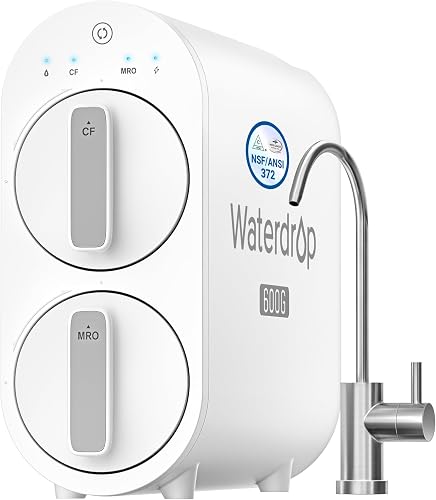
The G2P600 is a tankless under-sink RO system rated at 600 gallons per day, sold with two filters, a faucet and a user manual. It trades the usual storage tank for a slim cabinet-mounted body that frees up space under the sink.
Waterdrop G2P600: Best for busy family kitchens
- 600 GPD tankless flow
- 2:1 pure-to-drain ratio
- 7-stage filtration
- 30-minute DIY install
- 3-second filter changes
A compact tankless RO that fills a 200ml cup in about 8 seconds and wastes one cup for every two of pure water. The filters twist out in seconds, so routine care takes almost no effort.
Pros
- Tankless body frees cabinet space
- 2:1 drain ratio uses less waste water
- Filter changes take about 3 seconds
- Self-install is rated at about 30 minutes
Cons
- 600 GPD is the lowest flow in Waterdrop's tankless range
- A 1-year manufacturer warranty is shorter than some rivals
- Top TDS limit is 500 ppm
Waterdrop rates the body at 17.3 inches long, 5.9 inches wide and 14 inches tall, at 25.4 pounds. The brand builds it from ABS plastic and sells it with a 1-year manufacturer warranty.
Its model number is WD-G2P600-W, and Waterdrop lists the power source as corded electric with reverse osmosis as the purification method. Because there is no tank to refill in the background, the unit only makes water when the faucet is open, so it needs both a live outlet and steady feed pressure to keep its 600 GPD pace.
The included components are the RO system itself, the replacement filters, a faucet and the manual, so the box covers the main hardware. For a full look at the bigger sibling, read our waterdrop g3p600 review.
Who the G2P600 suits best
Buy the G2P600 if you have a family kitchen with steady daily demand and cabinet space that a tank would eat into. The 600 GPD rating covers drinking water, cooking, washing fruit and vegetables and filling pots, and the fast flow means you won't stand around waiting.
Waterdrop also points this model at offices and small companies, which tells you the daily volume is meant to stretch past a single household.
It also fits renters and DIY-minded buyers. Waterdrop rates the self-install at about 30 minutes, and the twist-and-pull filters mean you never need tools or have to slide the unit out to change them.
That is the difference between a filter change you do on a lunch break and one you put off for a month.
Skip it if your water runs above 500 ppm TDS. That's Waterdrop's stated ceiling for the G2P600, and a system with a higher limit is the safer match for very hard or mineral-heavy water.
Skip it too if you want the fastest flow Waterdrop offers; the 600 GPD rating is the entry point in its tankless line. A two-person apartment that mostly fills a kettle will find it more than enough, while a big family that draws several pitchers in a row may want to step up.
The specs that matter in daily use
The numbers that shape your day are flow rate, drain ratio, filter access and the TDS ceiling. Together they decide how often you wait, how much water goes down the drain and how much upkeep the system asks of you.
Waterdrop says the G2P600 fills a 200ml cup in about 8 seconds. The spec sheet puts the maximum flow rate at 25 milliliters per second, which lines up with that cup time.
That works out to a steady stream rather than a trickle, so filling a kettle or a water bottle is quick. The 600 gallons per day figure is the ceiling across a full day, not a burst rate, so treat the 8 second cup as the normal pace when the supply and power are good.
The 2:1 pure-to-drain ratio is the standout spec. For every 2 cups of filtered water, about 1 cup goes to waste, which Waterdrop says is roughly 60 percent less than a traditional RO system.
That waste water can still mop floors, wash a car or run a load of laundry. Over a year of daily use, the gap between one cup of waste per two cups of pure and the heavier drain of an older tank system adds up to a lot of saved water.
What the seven stages mean for your glass
Filtration runs through seven stages. Waterdrop describes the G2P600 as a 7 stage RO water filtration system and lists TDS reduction among its headline features.
The early stages take out sediment and larger particles that would clog the membrane, the RO membrane does the core work of pushing water through and leaving dissolved solids behind, and the later stages polish the taste. That layout is why the TDS ceiling matters so much.
Running it past 500 ppm puts more load on the membrane and the polishing filters than they were designed for.
Waterdrop certifies the G2P600 to NSF/ANSI 372 for lead-free materials, which covers the parts that touch your water. That is a materials standard, not a contaminant removal claim, so if you need a specific contaminant figure, ask Waterdrop directly for the test data on your supply.
Pull your water report or use a TDS meter before you buy, because a system working past its rated input will wear its filters faster.
Setting up the G2P600 under your sink
Plan on about 30 minutes for a self-install, according to Waterdrop, plus time to clear the cabinet and check the space. The work is straightforward: mount the unit, connect the feed line, the faucet line and the drain, then flush the filters as the manual directs.
The two filters ship in the box, so you are not hunting for parts before the first glass.
Start by measuring your cabinet. The body needs 17.3 inches of length, 5.9 inches of width and 14 inches of height, and you'll want clearance above it to twist the filters out later.
A cabinet already crowded with a disposal, cleaning supplies and a trash can may not leave the room the G2P600 needs. Remember that the unit is 25.4 pounds, so the mounting surface and the lines should be set up to carry that weight without strain.
Waterdrop includes the faucet and manual in the box. You'll still need a drill for the faucet hole if your sink doesn't already have one, plus a bucket and towels for the first flush.
The system runs on a corded electric power source, so confirm there's an outlet within reach. Don't trap the cord behind the unit or let it sit where a stored pot can pull on it.
Once it's running, flush the new filters as instructed before drinking the water. After that, the flow should be steady and the water clear.
Care and filter changes on the G2P600
Routine care is the easiest part of owning this system. Waterdrop designed the filters to twist and pull out without tools, and you don't have to move the unit to reach them.
The system's filter life indicators also tell you when each one is due, so you're not guessing by taste or calendar. For a busy kitchen, that early warning is the feature that keeps the water tasting the same month after month.
When an indicator lights, order the replacement, twist the old filter out, push the new one in and let the system flush. Waterdrop says a change takes about 3 seconds once the new filter is in hand, and that's the realistic figure if the cabinet is tidy and the unit is easy to reach.
Reordering is simple too, since Waterdrop tells buyers to search "G2P600" for replacement filters. The system also cuts replacement cost compared with older designs, according to Waterdrop, though the exact filter schedule follows the indicators rather than a fixed calendar.
Beyond filters, keep the cabinet dry and wipe up drips around the connections. Check the feed line and drain line now and then for kinks or loose fittings.
A slow leak you don't notice can damage the cabinet floor over months. The upper temperature rating is 87 °F, so keep hot water away from the unit and its lines.
The ABS plastic body wipes clean with a damp cloth. If you want to compare upkeep across brands before you commit, our guide to the best tankless reverse osmosis system covers how filter access and drain ratios differ.
The trade-offs to weigh before buying
The main trade-off is flow against your household size. At 600 GPD, the G2P600 is the slowest of Waterdrop's tankless models, and a large family that fills pitchers and pots back to back may notice the difference next to an 800 GPD system.
The 8 second cup is fast for one glass, but the daily ceiling is the number that matters when several people draw water at the same time.
The 1-year manufacturer warranty is the second thing to weigh. Waterdrop offers it, but some competitors back their systems for longer, so read the terms and know what's covered before you buy.
A short warranty is not a deal breaker on a simple tankless unit, but it does mean the first year is the window to catch any installation faults.
The 500 ppm TDS ceiling is a real limit for hard-water homes. If your supply runs higher, this isn't the right system, no matter how much you like the compact body or the drain ratio.
Finally, tankless means no stored water. That's the point, since it frees cabinet space and avoids a tank refilling after each draw.
But it also means the system depends on water pressure and power to deliver, so a home with weak pressure should check the specs first.
Alternatives worth a look
If the G2P600 doesn't quite fit your kitchen or water supply, Waterdrop's wider tankless range covers the gaps. The G3P600 is the closest sibling, and the G3P800 and X8 step up from there.
Our waterdrop g3p800 vs x8 comparison covers two of them in depth.
Waterdrop G3P600
The G3P600 is the closest sibling to the G2P600 and the natural next step if you want more capacity in the same tankless format. It's a strong choice for a bigger household that still wants a slim under-sink body and quick filter swaps.
Read the full waterdrop g3p600 review to see how the two compare.
Waterdrop G3P800 vs X8
The G3P800 raises the daily flow, and the X8 adds an alkaline stage for buyers who want that in their glass. If you're weighing the two, the waterdrop g3p800 vs x8 breakdown lays out which need each one serves.
Either makes sense when the G2P600's 600 GPD feels tight.
A tankless system with remineralization
Some buyers want the purity of reverse osmosis but miss the taste of minerals in the water. A tankless system with a remineralization stage restores some of that.
Our roundup of the best tankless ro system with remineralization covers the options if that's your priority.
Verdict: is the Waterdrop G2P600 worth it?
The Waterdrop G2P600 is worth buying for most family kitchens where water TDS stays under 500 ppm. It delivers fast tankless flow, a 2:1 drain ratio that saves water and filter changes that take seconds.
That's a practical package for everyday drinking and cooking.
Buy it if you want a compact tankless RO with low waste and easy upkeep. Step up to the G3P800 or X8 if your household draws a lot of water at once or you want an alkaline stage.
And if you'd rather compare the whole field first, start with our guide to the best tankless reverse osmosis system for tight cabinets.
Our score weighs specs, features and buyer feedback against what you're shopping for. The G2P600 earns its 8.2 on water savings, filter access and footprint, with the flow ceiling and short warranty holding it back from a higher mark.
Measure your cabinet and check your TDS before you order, and this waterdrop g2p600 review should leave you with a clear decision.
Frequently asked questions
How fast does the Waterdrop G2P600 make filtered water?
Waterdrop says the G2P600 produces 600 gallons per day and fills a 200ml cup in about 8 seconds. That steady flow suits drinking, washing produce and filling pots without waiting on a storage tank.
What does a 2:1 drain ratio mean on this RO system?
For every 2 cups of pure water it makes, the G2P600 sends about 1 cup to the drain. That is roughly 60 percent less waste water than a traditional RO system, and the waste water can still be used for mopping or laundry.
How often do you change the filters in the Waterdrop G2P600?
The G2P600 uses two filters, and the system's life indicators tell you when each one is due. Because the filters twist and pull out without tools and without moving the unit, a replacement takes about 3 seconds once you have the new filter.
Does the Waterdrop G2P600 fit under a standard kitchen sink?
The unit measures 17.3 inches long, 5.9 inches wide and 14 inches tall and weighs 25.4 pounds. Measure your cabinet's height, depth and width before ordering, and leave room for the water lines and the filters to twist out.
Is the Waterdrop G2P600 certified?
Waterdrop says the G2P600 is certified to NSF/ANSI 372 for lead-free materials. That standard covers the materials that touch your water, so ask Waterdrop directly if you need a specific contaminant claim confirmed for your supply.