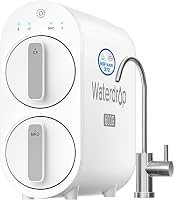
Waterdrop G3P800 vs X8: Which Tankless RO to Buy? (October 2026)
Choose the G3P800 for its 3:1 pure-to-drain ratio; choose the X8-WAN if you want alkaline mineralization and a faucet that tracks filter life. Both are 800 GPD tankless reverse osmosis systems with 10-stage filtration.
On this page (6 sections)
Choose the G3P800 for its 3:1 pure-to-drain ratio; choose the X8-WAN if you want alkaline mineralization and a faucet that tracks filter life. Both Waterdrop systems are tankless, have 800 GPD stated capacity and use 10-stage filtration.
The main difference is what each system prioritizes. The G3P800 favors a lower stated drain ratio, while the X8-WAN adds minerals and displays filter life on its smart faucet.
This comparison also covers certification claims, cabinet fit, faucet installation and a lower-capacity related option.


Waterdrop G3P800 vs X8: which should you choose?
Pick the G3P800 for its 3:1 pure-to-drain ratio; pick the X8-WAN for alkaline mineralization and filter-life monitoring. Both offer the same stated daily capacity and number of filtration stages.
The G3P800 is certified by IAPMO R&T against NSF/ANSI 58 for TDS reduction, NSF/ANSI 42 and 53 for chlorine, taste and odor reduction, and NSF/ANSI 372 for lead-free materials. The X8-WAN is certified to NSF/ANSI 42, 58 and 372, and Waterdrop says its 10-stage filtration was tested by SGS for reducing several impurities.
Certification scope differs, so don't assume the two systems have identical certified claims. Check the standard and reduction claims that matter for your water.
Which Waterdrop system has the lower drain ratio?
The G3P800 has the lower stated drain ratio. It produces 3 cups of filtered water for each cup of wastewater, while the X8-WAN states a 2:1 ratio.
That difference may matter in a household that uses a lot of RO water each day. It doesn't tell you the exact amount of wastewater your home will produce, since actual use depends on system conditions and how much water you draw.
For more context, read our guide to why reverse osmosis systems waste water. It explains how to think about the drain stream when comparing RO options.
Does the X8-WAN's mineralization make it the better choice?
Choose the X8-WAN if you specifically want alkaline mineralization. Waterdrop says it adds calcium, magnesium, sodium and potassium to the water.
The G3P800's product information doesn't specify a mineralization stage. If you want minerals added after RO, the X8-WAN is the clear fit from these two; if you don't need that feature, its presence alone may not justify choosing it.
How do filtration and capacity compare?
Both systems state 800 GPD capacity and 10-stage filtration. Those matching figures make the mineralization, drain ratio and faucet display more useful deciding points.
Waterdrop describes the G3P800 as reducing PFAS, fluoride, heavy metals, salts and other substances through 10-stage filtration. Its certifications cover specific reductions, including TDS, chlorine, taste and odor, and lead-free materials.
The X8-WAN uses a 0.0001 μm RO membrane and 10-stage filtration. Waterdrop says it reduces PFOA, PFOS, chlorine, taste and odor, fluoride, lead and other impurities, and names NSF/ANSI 42, 58 and 372 certifications.
These are different product claims and certification sets. If a particular contaminant is your concern, match it to the system's documented reduction claim and consider getting your water tested.
Our best tankless reverse osmosis systems guide compares more options by features and fit. For a smaller-capacity Waterdrop alternative, the G3P600 review covers its 600 GPD, 8-stage setup.
What do the smart faucets show?
The G3P800 faucet shows TDS and lights when water flows; the X8-WAN faucet shows TDS and filter life. Choose the display that gives you the information you expect to check.
Neither display should replace scheduled filter changes or water testing when you need to verify a specific contaminant. TDS is a broad measurement and doesn't identify which dissolved substances are present.
The X8-WAN includes a 24-month RO filter lifespan in its specifications. Follow the manual's replacement guidance for each filter rather than assuming every filter lasts that long.
If you are also comparing non-RO systems, our Waterdrop TSU vs TSA comparison looks at two under-sink filters with a different approach.
Will either system fit under your sink?
Measure your cabinet before choosing either model, and confirm there's a suitable electrical outlet. Tankless designs save the space occupied by a storage tank, but the system still needs room and access for installation and filter changes.
The G3P800 measures 18.12 x 5.67 x 17.72 inches. The X8-WAN measures 18.2 x 6.25 x 16.72 inches.
The G3P800 is slightly narrower and deeper in height, while the X8-WAN is a little shorter and wider. Use the full measurements, plus the manual's required clearances, to judge your cabinet.
The X8-WAN requires drilling a countertop hole for its faucet. Confirm that your countertop can be drilled and that you are comfortable with the faucet location before ordering.
If you want help comparing tankless RO layouts and installation needs, see our under-sink reverse osmosis buyer's guide. For an overview of the tankless format, our tank vs tankless RO comparison explains the storage and space tradeoffs.
Is the G3P600 a better alternative?
Consider the G3P600 if you want a 600 GPD Waterdrop tankless RO system and don't need the 800 GPD capacity of the other two. It has 8-stage filtration, a 2:1 pure-to-drain ratio and a smart faucet with TDS and filter-life displays.
It also has NSF/ANSI 42, 58 and 372 certifications, plus NSF/ANSI 53 certification according to its product information. Its dimensions match the G3P800 at 18.12 x 5.67 x 17.72 inches.
The G3P600 is a related alternative, not a direct match on capacity or stage count. Compare the system's features with your household's likely water use and the specific contaminant claims you need.
Which Waterdrop tankless RO should you buy?
Buy the G3P800 for its 3:1 pure-to-drain ratio, or the X8-WAN for alkaline mineralization and filter-life display. Choose the G3P600 if 600 GPD capacity is enough and its feature set better fits your needs.
Before you decide, measure cabinet space, check the electrical setup and review the faucet installation requirements. If wastewater is a key concern, start with our explanation of RO system waste water.
Frequently asked questions
What is the difference between Waterdrop G3P800 and X8?
Both systems have 800 GPD stated capacity and 10-stage filtration, but the G3P800 has a 3:1 pure-to-drain ratio while the X8-WAN has a 2:1 ratio and alkaline mineralization. The X8-WAN faucet also displays filter life; the G3P800 faucet displays TDS and lights when water flows.
Does the Waterdrop X8-WAN add minerals?
Yes. The X8-WAN includes alkaline mineralization that adds calcium, magnesium, sodium and potassium after reverse osmosis.
Choose it if you want that feature, but don't treat mineralization as a substitute for checking whether the system's filtration suits your water and needs.
Which system has the better pure-to-drain ratio?
The G3P800 has the more favorable stated ratio: 3 cups of filtered water for each cup of wastewater, compared with 2 cups for each cup from the X8-WAN. Actual household use can vary, so use these figures to compare the systems rather than predict an exact water bill.
Do the Waterdrop G3P800 and X8-WAN need electricity?
Both are corded electric under-sink systems. Check that you have a suitable outlet inside the cabinet before choosing either one, and follow the product manual for installation and electrical requirements.
Does the X8-WAN faucet require drilling?
Yes. Faucet installation requires drilling a hole in the countertop.
Check your sink and counter material, existing openings and installation plans before you buy; if you rent, get permission before making a permanent hole.