How Much to Install Reverse Osmosis System?
Expect roughly 150 dollars to 400 dollars in labor to have a reverse osmosis system installed, on top of the kit itself. The unit's price varies widely, but plumbing labor for a standard under-sink setup usually lands in that range, while a careful DIY install costs only your time plus a few small parts.
On this page (8 sections)
- How much to install a reverse osmosis system: the short answer
- What does the plumber's labor cover?
- How much does a DIY install save you?
- Which systems cost less to install and maintain?
- What else can raise the install bill?
- Is professional installation worth the cost?
- Does the filter's job change the install price?
- What should you budget for the whole job?
Expect roughly 150 dollars to 400 dollars in labor to have a reverse osmosis system installed, on top of the kit itself. The unit's price varies widely, but plumbing labor for a standard under-sink setup usually lands in that range, while a careful DIY install costs only your time plus a few small parts.
The question people really ask is whether to pay a plumber or do it themselves. This guide breaks the bill into its parts so you can see where the money goes and which path fits your sink.
How much to install a reverse osmosis system: the short answer
The install charge is mostly labor, and most under-sink jobs run 150 dollars to 400 dollars. A simple swap where a hole and a water line already exist sits at the low end.
A first-time install that needs a new faucet hole, a longer tube run, or a drain connection pushes toward the top.
Hourly plumbing rates usually fall between 75 dollars and 150 dollars, and the typical job takes 2 to 3 hours. A licensed plumber near a big city may charge more than one in a rural area.
Ask for a flat quote when you can, so the final bill matches what you were told.
The kit price is a separate cost. A basic system and a six-stage unit with remineralization sit in different tiers, so pick the unit first and then price the labor around it.
Our guide to how much does a reverse osmosis system cost covers the unit side in more detail.
What does the plumber's labor cover?
It does not usually include the kit unless you buy it through the plumber.
The feed-water connection is the first task. The plumber adds a valve or saddle to your cold-water pipe so the system gets its own supply.
Then comes the faucet: mounting it in a new or existing hole and running tubing up to it.
The drain connection is the part many DIYers find fiddly. A drain saddle clamps to the sink's waste pipe and carries the wastewater away.
A plumber also checks the air gap and the storage tank pressure before calling the job done.
Some plumbers charge a separate trip fee or a minimum call-out. That can add a flat amount even when the work is short.
Get the quote in writing, including whether the trip fee is inside or outside the labor figure.
How much does a DIY install save you?
A DIY install saves the whole labor charge, which is the biggest line on the bill. Your only extra costs are a drill bit for a faucet hole, a feed adapter if the kit's fitting doesn't match your pipe, and your own time.
The job is within reach for most homeowners. The under-sink kits are built for DIY, with push-to-connect fittings and color-coded tubing.
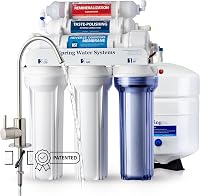
The iSpring RCC7AK-BN uses those fittings and includes a top-mounted faucet fastener so you can tighten it from above the counter.
Our walkthrough on how to install under sink reverse osmosis covers each step in order. Set aside half a day for a first install, and check under the sink for leaks a few hours after the water runs.
Skip DIY if your cold-water pipe is old or hard to reach, or if you rent and the lease puts plumbing work on the landlord. In those cases the labor charge is money well spent.
Which systems cost less to install and maintain?
Buying a kit with the fittings, faucet, and tank in the box keeps the install simple and the parts cost low. A system that needs extra pieces adds both money and time to the job.
The APEC ROES-50 ships with quick-connect fittings, colored tubing, a brushed nickel faucet, and a storage tank. That means a first-time installer has the common pieces on hand.
It is a five-stage, 50 gallon per day unit for a smaller household.
The iSpring RCC7AK-BN is a six-stage, 75 gallon per day system. It adds a mineral stage after the membrane.
The kit includes the faucet and storage tank, so the install parts are already there.
Who should add a separate storage tank?
Add the iSpring T32M if your system runs low on water at busy times. The tank holds up to 3.2 gallons of treated water and comes pre-pressurized between 7 and 10 psi.
It suits a kitchen where several people draw water in a short window.
It discharges in either a vertical or horizontal position, which helps in a crowded cabinet. The stainless steel 1/4 inch valve thread matches common RO tubing.
Check the space under your sink before adding a second tank.
Skip it if your current tank keeps up with daily use. A second tank takes cabinet room and adds one more item to check during maintenance.
What else can raise the install bill?
A new faucet hole, a long tube run, or an outlet where there isn't one are the usual add-ons. Each one adds a task and, sometimes, a specialist's fee.
Drilling through a stone countertop can mean a separate charge. So can running tubing from a distant water line or adding a power outlet for a system with a pump.
Most standard kits run on water pressure without electricity, but a pump-assisted unit needs a socket.
Disposal of old plumbing and moving stored items out of the cabinet are small extras some plumbers bill for. Clear the cabinet before the plumber arrives to avoid that charge.
A flat-rate plumber may also fold these tasks into one quoted price.
Is professional installation worth the cost?
Pay a plumber when the plumbing is tricky, the install needs a new hole, or a leak would cause real damage. The charge buys speed and a tested connection you don't have to revisit.
Do it yourself when you have a standard sink, a kit with the fittings included, and a free afternoon. The savings are clear, and the process is well documented.
A first-time installer with basic tools can finish a straightforward job.
Some warranties may depend on proper installation. Read the terms that come with your kit before deciding.
A licensed install also gives you someone to call if a fitting weeps later.
The same logic applies when you rent. A reverse osmosis system for apartment use often has to be easy to remove, so a system you can uninstall without cutting pipe fits better than a permanent plumbing change.
Does the filter's job change the install price?
No. The filters inside the kit don't change the labor charge, but the water they treat can change what you want from a system.
If your water has a specific problem, pick a unit built for it before you book the install.
For example, if you are worried about arsenic in your supply, read does a reverse osmosis system remove arsenic to see how the membrane handles it. Choosing the right unit first means the plumber installs it once, without a return visit.
The cost to install a reverse osmosis system stays about the same whatever the unit does. Labor depends on the sink and the plumbing, not on the number of stages.
So spend the extra on the unit only when the water quality calls for it.
What should you budget for the whole job?
Budget the kit price plus 150 dollars to 400 dollars for labor, or the kit price plus a small tools allowance for DIY. Add a little for an adapter or a drill bit if you lack them.
Set a simple total: the system, the install, and a first set of replacement filters. Filter life varies by unit and water quality, so factor in the first change.
A higher upfront cost can pay back over time, which our cost-of-ownership guide explains.
The final bill for how much to install a reverse osmosis system depends more on your kitchen than on the brand. Get two quotes if you hire out, and ask what each one includes.
For a DIY plan, gather the fittings and the walkthrough first.
If your water has a known contaminant, choose the matching system before you book anything. Then the labor cost stays fixed and the water you get is the water you wanted.
Frequently asked questions
Is it cheaper to install a reverse osmosis system yourself?
Usually yes. A DIY install saves the plumber's labor charge and costs you only the kit plus small parts like an adapter or a drill bit.
The trade-off is time and the risk of a leak you have to fix yourself.
How long does a professional install take?
A plumber typically needs 2 to 3 hours for a standard under-sink system with an existing faucet hole. Jobs that need a new hole drilled in stone, a longer tubing run, or a new electrical outlet can stretch to half a day.
Does installing a reverse osmosis system need a permit?
Many areas don't require a permit for an under-sink filter, but some do for any new plumbing connection. A licensed plumber knows your local rules and can tell you before the work starts.
What parts might cost extra on top of the kit?
A faucet hole, a feed-water adapter, extra tubing for a long run, and a drain saddle are the common extras. Most kits include these pieces, so the add-on cost stays small for a typical sink.
Can a plumber install a system I bought online?
Yes, many plumbers will install a kit you supply. Ask first, because some only install brands they carry.
Expect the labor quote to be the same either way.