Does a Reverse Osmosis System Remove Arsenic?
Yes. A reverse osmosis system removes most arsenic from drinking water, because the RO membrane rejects dissolved arsenic along with other minerals and metals. Removal is strongest when the system is certified to NSF/ANSI 58 and the filters and membrane are changed on schedule.
On this page (8 sections)
- How does an RO membrane remove arsenic?
- How much arsenic does an RO system remove?
- What limits how much arsenic an RO system removes?
- Why does NSF/ANSI 58 certification matter for arsenic claims?
- What does an RO system's arsenic stage look like?
- How should you size and maintain an RO system for arsenic?
- Which RO systems handle arsenic for most homes?
- How do you keep arsenic removal working over time?
Yes. A reverse osmosis system removes most arsenic from drinking water, because the RO membrane rejects dissolved arsenic along with other minerals and metals.
Removal is strongest when the system is certified to NSF/ANSI 58 and the filters and membrane are changed on schedule.
The short answer matters most when your water test shows arsenic above the safety limit. RO is one of the home treatment options that can cut it down, but the result depends on the system and the form of arsenic in your water.
The rest of this guide explains what the membrane does, what limits removal and how to keep the system working.
How does an RO membrane remove arsenic?
The RO membrane rejects arsenic by size and charge as water is pushed through it. Water is forced against a semi-permeable membrane under pressure.
Most dissolved salts and metals, arsenic included, cannot pass the membrane pores, so they are flushed away in the waste stream.
The membrane's pores are around 0.0001 microns, small enough to block dissolved arsenic compounds as well as lead, fluoride and other ions. The treated water that passes through goes to the storage tank.
The reject water carries the concentrated contaminants down the drain.
One stage of RO filtration does most of the arsenic work. The carbon and sediment stages ahead of the membrane protect it from chlorine and grit so it keeps rejecting contaminants.
APEC describes this squeezing process as the basis of how its ROES-50 purifies water.
How much arsenic does an RO system remove?
Most RO systems reject the large majority of dissolved arsenic, often well over 90%. The exact figure depends on the water and the system.
A quality membrane under normal household pressure removes most arsenate, the form found in most treated tap water.
Look for a maker's stated arsenic reduction figure and the NSF/ANSI 58 certification that backs it. iSpring's RCC7-BN is certified to NSF/ANSI 58 and lists arsenic among the contaminants it reduces. That certification covers the complete system, not just one filter, so the claim is tied to a tested setup.
A system with no certification may still remove some arsenic, but you have no verified reduction figure to plan around. Treat an uncertified arsenic claim as a question to check, not a promise.
What limits how much arsenic an RO system removes?
The form of arsenic, water chemistry and system condition decide the real removal rate. Arsenate, the oxidized form common in municipal supplies, is rejected well.
Arsenite, which can appear in well water with low oxygen, is not rejected as easily.
Water pressure and temperature matter too. An RO membrane performs best within its rated pressure range, and cold water slows production.
APEC's ROES-50 lists an operating range of 40–85 psi, while the iSpring RCC7AK-BN lists 70 psi. Very high incoming arsenic also puts more load on the membrane.
Filter condition is the part you control. A clogged sediment filter, an exhausted carbon block or a fouled membrane all reduce rejection.
Change filters on the maker's schedule and retest the water after any change in your supply.
Can RO remove arsenite as well as arsenate?
Standard RO removes arsenite less reliably, so well water often needs an oxidizing prefilter first. Arsenite passes the membrane more easily than arsenate.
An oxidation stage turns it into arsenate, which the membrane then rejects well.
Most municipal systems already oxidize and treat their water, so arsenate is the usual form at the tap. Private well owners should test for both forms before choosing a system.
If your test shows arsenite, look for a setup with an oxidation prefilter ahead of the RO membrane.
Why does NSF/ANSI 58 certification matter for arsenic claims?
NSF/ANSI 58 is the standard for point-of-use RO systems, and certification ties a reduction claim to testing. A certified system has been checked for contaminant reduction, including arsenic when the maker lists it, plus material safety and structural integrity.
The iSpring RCC7AK-BN carries NSF/ANSI 58 certification for the whole system. That covers its six stages, from the sediment filter through the RO membrane to the mineral stage.
APEC says the ROES-50 is certified to NSF 58 and 372 as well.
A maker's marketing copy can say "reduces arsenic" without testing. Certification gives you a document to check.
When you compare systems, look up the certification and confirm arsenic sits on the reduced-contaminant list.
What does an RO system's arsenic stage look like?
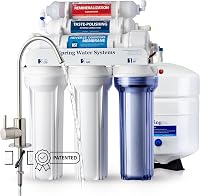
Arsenic removal happens at the RO membrane, with prefilters protecting it and optional stages improving the result. A typical system runs sediment, carbon and carbon block filters first.
The RO membrane follows as the main barrier.
A final carbon or mineral stage polishes taste.
That layout is why a six-stage system with remineralization still removes arsenic: the membrane does the rejecting, and the extra stages change taste and pH. The iSpring RCC7AK-BN adds a mineral stage after the membrane.
The ROES-50 uses five stages without remineralization.
Some systems offer a dedicated arsenic filter cartridge as an add-on. These use an adsorbent media that binds arsenic, often before or after the RO stage.
They can help, but the RO membrane plus a certified system is the core of reliable arsenic reduction.
How should you size and maintain an RO system for arsenic?
Match the system to your water use and keep the maintenance schedule. A 50 or 75 gallons-per-day system suits most households.
The ROES-50 is rated at 50 gallons per day and the iSpring RCC7AK-BN at 75.
Plan filter changes from the start. Most makers recommend prefilter changes every 6 to 12 months and an RO membrane every 2 to 3 years.
The iSpring models list replacement sets at 6-month, 1-year, 2-year and 3-year intervals. APEC recommends changing filters every 6 to 24 months based on incoming water quality.
Arsenic removal depends on every stage doing its job. A clogged prefilter lets sediment reach the membrane.
An exhausted carbon block lets chlorine degrade it. Replace filters on time and retest your treated water to confirm the arsenic level stays low.
What if the arsenic level is still high after treatment?
Retest first, then adjust the system rather than living with a high reading. A high result after treatment can mean the filters are overdue, the membrane is fouled or the system isn't certified for arsenic.
Check the maintenance date and the certification.
If the system is certified and maintained but the reading is still high, your water may carry arsenite that needs an oxidation stage. A water treatment professional can test for the form and recommend the right setup.
For high arsenic, a point-of-use RO at the kitchen tap is a practical choice for drinking and cooking water.
Which RO systems handle arsenic for most homes?
Pick a certified system with a good maintenance schedule and enough daily capacity. The iSpring RCC7AK-BN is the strongest overall pick here: NSF/ANSI 58 certified, 75 gallons per day, six stages and a mineral stage that adds taste back after treatment.
It reduces arsenic along with lead, fluoride and other contaminants, and its replacement filters are easy to plan for.
The APEC ROES-50 is the budget-friendly choice for smaller households. It's a 5-stage, 50 gallon-per-day system certified to NSF 58 and 372, and APEC recommends changing filters every 6 to 24 months.
The iSpring RCC7-BN is a solid basic option: 5 stages, 75 gallons per day and NSF/ANSI 58 certification, with the same patented top-mounted faucet design as the RCC7AK-BN. It reduces arsenic and over 1,000 other contaminants without a mineral stage.
If space is tight, compare reverse osmosis systems for apartments. For a family kitchen, our reverse osmosis systems for home guide covers larger setups.
On a tight budget, the best reverse osmosis system under 300 dollars roundup narrows the field. If the system starts rattling after installation, our guide to why a reverse osmosis system makes noise explains the common causes.
Our score weighs specs, features and buyer feedback against what you're shopping for. Every product in this guide gets one badge for the need it serves best.
How do you keep arsenic removal working over time?
Test the water, change filters on schedule and retest after any change in your supply. Arsenic removal is only as good as the stages doing the work.
A certified system with fresh filters is the reliable baseline.
Test your source water first so you know what you're treating. Buy a certified system that lists arsenic reduction.
Change prefilters and the membrane on the maker's schedule. Retest the treated water once a year, and sooner if your water source changes.
If a reading comes back high, don't ignore it. Check the filters and certification, then get a professional opinion on the arsenic form.
For anyone asking does a reverse osmosis system remove arsenic, the honest answer is yes, most of it, when the system is certified and maintained. That combination is what makes RO a dependable choice at the kitchen tap.
Frequently asked questions
Does a reverse osmosis system remove all the arsenic from water?
No. RO removes most dissolved arsenic, but not all of it.
How much gets through depends on the membrane, the water pressure and temperature, the incoming arsenic level and whether the filters and membrane are in good condition.
Does arsenic in water get through the RO membrane?
The membrane rejects most dissolved arsenic. Rejection is strongest for the arsenate form that most treated tap water contains.
The more difficult arsenite form in some well water needs an oxidizing prefilter before the RO stage to be rejected well.
How do I know my RO system removes arsenic?
Look for certification to NSF/ANSI 58, the standard for point-of-use RO systems. That certification covers contaminant reduction claims, including arsenic for systems that list it.
Certification applies to the complete system, so an uncertified add-on stage doesn't carry the same assurance.
Should I test my water for arsenic before buying an RO system?
Yes. A water test tells you whether arsenic is present and at what level.
It also shows whether your water has the arsenate or arsenite form.
That decides how much treatment you need and whether an oxidizing prefilter belongs in the setup.
How often should I change RO filters when treating arsenic?
Follow the maker's schedule. Prefilters usually change every 6 to 12 months and the RO membrane less often.
Arsenic removal depends on those stages working, so replace them on time and test the treated water again to confirm it still works.
Does RO water lose healthy minerals when it removes arsenic?
Yes. RO removes many dissolved minerals along with arsenic.
A remineralization stage adds some calcium and magnesium back and raises the pH.
It does not replace the RO stage's arsenic removal, but it improves the taste and mineral content of the treated water.