How to Clean a Reverse Osmosis System
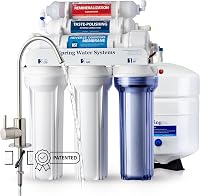
To clean a reverse osmosis system, flush the storage tank with a mild bleach solution, rinse it fully, and replace the filters on schedule. Sanitize the tank and lines once or twice a year, and swap sediment, carbon and membrane stages when flow drops or taste changes.
On this page (10 sections)
- How to clean a reverse osmosis system in six steps
- What supplies do you need before you start?
- How do you sanitize the storage tank and lines?
- How do you replace the filters stage by stage?
- How do you drain and refill the storage tank safely?
- How often should you clean and replace each stage?
- Why does water taste or smell odd after cleaning?
- When should you call a pro instead of cleaning it yourself?
- What are the most common cleaning mistakes?
- How to keep the system clean between services
To clean a reverse osmosis system, flush the storage tank with a mild bleach solution, rinse it fully, and replace the filters on schedule. Sanitize the tank and lines once or twice a year, and swap sediment, carbon and membrane stages when flow drops or taste changes.
Knowing how to clean a reverse osmosis system is mostly about two habits: keeping the tank and lines sanitary, and replacing stages before they foul. Do both and the system keeps making clean water without a plumber's help.
How to clean a reverse osmosis system in six steps
Shut off the water, drain the tank, sanitize, flush, replace filters, and run the faucet is the order that works. The steps below apply to a standard under-sink system with a storage tank and four to six stages.
- Close the feed valve and open the faucet to release pressure.
- Drain the storage tank fully through the faucet.
- Add a mild bleach solution to the empty tank, then refill and let it sit.
- Flush the tank and lines until no bleach smell remains.
- Replace the pre-filters, carbon stages and membrane on schedule.
- Run the faucet for several minutes and drain the tank once more before drinking.
Read your system's manual first for its sanitizing dose and any tank valve steps. Some makers specify a different bleach strength or an extra rinse cycle.
What supplies do you need before you start?
A mild unscented bleach, a clean bucket, towels and replacement filters cover most of the job. A 5-gallon bucket helps you catch water when you disconnect lines or drain the tank.
Use plain household bleach with no additives or scent. A measuring spoon gets the dose right, and gloves protect your hands from the solution.
Keep a second bucket or towels under the tank to catch drips.
You'll also want a filter wrench if your housings are tight. Check the manual for the order of the stages so you can put the new filters back in the right places.
How do you sanitize the storage tank and lines?
Empty the tank, add the bleach solution, and let it stand for a short soak before flushing. The tank is the part of the system most likely to grow a film, because water sits in it between draws.
Close the feed valve and open the faucet until the tank runs dry. Then pour in the bleach dose your manual calls for and refill the tank with filtered water.
Let it sit, then open the faucet and drain it completely.
Repeat the fill and drain until the water no longer smells of bleach. A carbon post-filter helps pull residual chlorine, but don't rely on it alone; flush until the smell is gone.
How do you replace the filters stage by stage?
Swap the pre-filters first, then the carbon stages, then the membrane so each stage protects the next. Replace in the order the water flows, from sediment to post-carbon.
Sediment and carbon pre-filters
Change the sediment and carbon block filters every 6 to 12 months in most homes. These catch dust, rust, chlorine and taste and odor before the water reaches the membrane.
The APEC Water FILTER-MAX-ESPH set is built for the ROES-PH75 and covers all six stages in one box. Its first three stages remove dust, particles, rust, chlorine, taste and odor.
The membrane and post-carbon filter
The membrane and post-carbon stages last longer, often 2 to 4 years. Replace the membrane when flow slows sharply or TDS climbs even after a flush.
The iSpring F19K75 is a 19-piece set for 6-stage systems, with a 75 GPD membrane and push-fit connections. Its alkaline stage adds calcium, magnesium and potassium back after filtration.
If your water is hard or your system runs often, shorten the intervals. High sediment loads clog the pre-filter faster and push the membrane harder.
How do you drain and refill the storage tank safely?
Release pressure first, then drain through the faucet so water doesn't spray when you open a housing. The tank holds water under pressure, so a quick release valve can send it everywhere.
Close the feed valve and open the faucet. Let the tank empty, then loosen the tank valve slowly with a towel underneath.
If the tank won't drain, check that the faucet is fully open and the feed is off.
A tank that won't hold pressure, or one that feels waterlogged and heavy, may need replacing. The iSpring T32M holds up to 3.2 gallons with a food-grade butyl diaphragm and a 1/4-inch ball valve.
How often should you clean and replace each stage?
Sanitize the tank once or twice a year, and follow the maker's replacement schedule for each stage. A pre-filter that looks brown or feels slimy is overdue, even if the calendar says otherwise.
| Part | Clean or replace | Signal it's time |
|---|---|---|
| Storage tank | Sanitize once or twice a year | Musty smell, flat taste |
| Sediment pre-filter | Replace every 6 to 12 months | Brown or grey color, slow flow |
| Carbon pre-filter | Replace every 6 to 12 months | Chlorine taste gets through |
| RO membrane | Replace every 2 to 4 years | TDS climbs, flow slows |
| Post-carbon filter | Replace every 12 months | Water tastes flat |
Check the manual for your exact model, since stage counts and intervals vary. A 6-stage system with an alkaline filter adds one more stage to track.
Why does water taste or smell odd after cleaning?
Residual sanitizer or a saturated carbon stage usually causes the off taste. Flush the system longer before you judge the water.
Run the faucet for several minutes and drain the tank once more after refilling. If the taste lingers, the post-carbon filter may be spent and ready for a change.
A membrane that's past its prime also lets more dissolved solids through, which changes the flavor.
Never skip the flush after sanitizing. Bleach in drinking water is a safety issue, not just a taste problem.
Flush until the smell clears completely.
When should you call a pro instead of cleaning it yourself?
Call a technician if the system leaks at a fitting, the tank won't hold pressure, or water keeps tasting bad after a full service. Most cleaning and filter swaps are DIY jobs, but some faults need a trained hand.
Watch for water pooling under the sink, a feed valve that won't close, or a membrane housing that cracks when you loosen it. Those are plumbing problems, not cleaning problems.
A professional can also check the drain line and air gap for clogs you can't reach.
If you're choosing a system in the first place, our guide to the best reverse osmosis system for an apartment covers compact models that fit tight cabinets. For a family kitchen, see the best reverse osmosis system for a home.
If you want to know whether your system handles a specific contaminant, our explainer on whether a reverse osmosis system removes arsenic walks through what the membrane catches. And if budget is the deciding factor, compare the best reverse osmosis system under 300.
What are the most common cleaning mistakes?
Skipping the flush, using too much bleach and changing filters out of order are the mistakes that cause most problems. Each one is easy to avoid once you know the sequence.
Don't pour bleach straight into a full tank; measure the dose and add it to an empty tank first. Don't skip the pre-filter because the water still tastes fine, since a clogged sediment stage wears out the membrane.
And don't replace the membrane before the carbon stages, because new carbon can shed fines into a fresh membrane.
Finally, don't drink the water until the bleach smell is gone. Flush thoroughly, drain the tank once more, and then fill your glass.
How to keep the system clean between services
To keep learning how to clean a reverse osmosis system simple, sanitize on a calendar and replace filters on schedule. A yearly tank flush plus stage swaps at the maker's intervals keeps the water tasting fresh and protects the membrane.
Pick the APEC FILTER-MAX-ESPH set for an ROES-PH75, or the iSpring F19K75 for a 6-stage system. If the tank itself is the weak point, the iSpring T32M replaces a waterlogged unit.
Do the flush and the filter change in the same session so you only drain the tank once. That habit makes the yearly job quick and keeps your under-sink RO running clean.
Frequently asked questions
How often should I sanitize an RO storage tank?
Once or twice a year is a good rhythm for most under-sink systems. Sanitize sooner if the water tastes flat or musty, if the system sat unused for weeks, or after you replace the membrane and filters.
Can I clean an RO membrane instead of replacing it?
No. Cleaning removes surface film, but a membrane loses rejection over time and can't be restored to like-new performance.
Replace the membrane when TDS creep or slow flow shows it has aged.
Do I need to drain the tank before replacing filters?
Yes. Close the supply valve, open the faucet to release pressure, and drain the tank so water doesn't spray when you unscrew housings.
Then replace stages in order and flush the system before use.
How do I know when the sediment filter is clogged?
Flow from the faucet slows and the filter turns brown or grey. Check it every few months; a dirty pre-filter makes the membrane and carbon stages work harder and shortens their life.