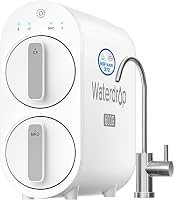
Waterdrop X8 Review: Tankless RO for Clean Water (November 2026)
The Waterdrop X8-WAN is a good fit for a family that wants fast, mineral-enriched RO water from a compact under-sink box. Choose it if 800 GPD flow and a 2:1 drain ratio matter more to you than the lowest up-front cost.
On this page (8 sections)
The Waterdrop X8-WAN is a strong match for a busy family kitchen that wants fast, mineral-enriched water from a small under-sink unit. Its 800 GPD flow and 2:1 drain ratio are the headline numbers, and the tankless body keeps your cabinet usable.
That speed comes at a premium tier, and the countertop faucet means drilling. If either point is a deal-breaker, the alternatives below make more sense.
This Waterdrop X8 review covers what the specs mean in daily use so you can decide before you order.
The Waterdrop X8-WAN at a glance
The X8-WAN is a 10-stage tankless reverse osmosis system with a smart faucet and a mineral stage at the end. Waterdrop sizes it for family use, with the flow rate to back that up.
Waterdrop X8-WAN: Best for mineral-enriched water

- 800 GPD flow
- 10-stage filtration
- 0.0001 μm RO membrane
- Tankless design
- Smart digital faucet
- 2:1 pure to drain
A tankless RO system that adds minerals back after a 0.0001 μm membrane strips impurities out. The 800 GPD rate and smart faucet suit a busy kitchen.
Pros
- 800 GPD flow fills glasses fast
- Adds calcium, magnesium, sodium and potassium back
- Compact tankless body saves cabinet space
- Smart faucet shows TDS and filter life
- 2:1 pure to drain ratio
Cons
- Countertop drilling needed for the faucet
- Premium price tier versus basic RO
- Max supported TDS of 500 ppm limits very hard water
The short version: it strips impurities with a 0.0001 μm membrane, then adds calcium, magnesium, sodium and potassium back. The faucet displays TDS and filter life, so you can watch the system work.
The parts list is short and practical. Waterdrop sells the system itself with three filters pre-installed, and the model number WD-X8-WAN is the one to search if you ever need to look up a part.
Replacement parts in the line include the WD-F2 filter, the WD-F1A filter and the WD-X8-F3 filter, so the stages have names you can check against the manual when a change comes due.
What the box includes
Waterdrop ships the system with three filters already installed, plus the smart faucet and a manual. Setup is mostly connecting lines, mounting the faucet and letting it flush.
What kind of buyer it fits
It fits a household of three or more that drinks a lot of water and cooks with it. The 800 GPD rate means back-to-back glasses and pots don't leave you waiting at the tap.
It also fits anyone who dislikes the flat taste of stripped water. The mineral stage is the feature that sets this unit apart from plain RO boxes at the same size.
One more buyer to name: anyone upgrading from an old tank RO that has lost cabinet space to a pressure tank. The X8-WAN's whole point is putting that shelf back to work while raising the flow rate at the same time.
Who should buy the Waterdrop X8-WAN
Buy the X8-WAN if fast flow, added minerals and a compact footprint top your list. A family filling water bottles every morning will notice the 800 GPD rate more than any other feature.
Buy it if your water is municipal and within the 500 ppm TDS ceiling Waterdrop lists. Most city supplies sit well under that, so the membrane won't be fighting heavy mineral loads.
Buy it if you're willing to drill the countertop for the smart faucet. That display is a real convenience, but it means a hole in stone or laminate.
Buy it if you want fewer filter changes over the years. A 24-month RO membrane means the most expensive part of upkeep waits two years at a time, and the faucet countdown means you don't have to keep a paper calendar taped inside the cabinet door.
Skip it if your budget is tight or your water runs very hard. The best tankless reverse osmosis system guide shows cheaper picks and models built for tougher supplies.
Skip it if you rent and can't drill. A countertop or under-sink filter that uses the existing tap avoids the hole entirely.
Skip it if a simple filter with no electricity is all you need. This is an appliance with a cord, a drain line and a faucet, and it earns that complexity only if you want RO-level purity.
The specs that matter in daily use
The 800 GPD rating is the number you'll feel every day. It means a steady stream at the faucet, not the trickle old tank systems delivered while the tank refilled.
Tankless design removes the pressure tank, so there's no wait for a tank to recharge after a big draw. Fill a pitcher, then a pot, and the flow keeps coming.
The 0.0001 μm membrane is the core of the purification. Waterdrop says the 16-layer membrane reduces PFOA, PFOS, chlorine, bad taste and odor, fluoride and lead, with SGS testing behind those claims.
Waterdrop also lists NSF/ANSI 42, 58 and 372 certification. Those cover taste and odor, health-related contaminant reduction and lead-free materials respectively.
The 10-stage path is longer than most tankless units run. Extra stages usually mean more contact time and a final polish, which is where the mineral addition sits.
The 2:1 pure to drain ratio matters for water bills over years. Older RO systems wasted three to four gallons for every one they made.
Waterdrop lists a 24-month RO filter lifespan. Fewer filter changes means less cost and less fuss over the life of the system.
The temperature range is worth a look too. The unit is rated from 41 °F to 100 °F, so it belongs on a cold feed line indoors, not on a line that can freeze or run hot.
The body is made of BPA-free material, and the tankless format removes the pressure tank where stale water used to sit. Every draw comes fresh off the membrane instead of from a vessel that filled hours ago.
Size and fit under the sink
The unit measures 18.2 in long, 6.25 in wide and 16.72 in tall. It weighs 16.03 kg, so plan how you'll lift it into the cabinet.
The narrow 6.25 in width is the useful part. It slides into the gap beside a disposal or a bin where a squat tank never fit.
Measure your cabinet first, and leave room for the lines and the power cord. The system needs a corded electric outlet under the sink.
The smart faucet
The faucet displays TDS levels and filter life. That turns a hidden appliance into something you can check at a glance.
The faucet needs a drilled hole in the countertop. Waterdrop notes this plainly, so plan the job before ordering if you have stone counters.
Setup and installation
Waterdrop says the X8-WAN installs in about 30 minutes with a simple DIY process. That estimate assumes you already have an outlet and a drilled faucet hole, so plan those two jobs first.
The three filters come pre-installed, which removes the fiddliest step. You mount the system, connect the feed line and drain line, then attach the faucet.
The drain connection needs its own route, either to a disposal or a standpipe. Keep the drain line high enough that it doesn't siphon back, and follow the manual's routing.
The faucet hole is the step that changes the timeline. Drilling tile or quartz needs the right bit and patience, and some counters call for a pro.
Once plumbed, flush the system as directed before drinking. That clears manufacturing residue and lets the membrane settle.
Check every joint for drips over the first day. A slow weep under a cabinet does quiet damage to the cabinet base.
If you're weighing this unit against a close sibling, the Waterdrop G3P800 vs X8 comparison puts the two side by side on flow, features and fit.
Care, filters and long-term cost
A 24-month RO filter lifespan is the standout in the care picture. Most tankless systems ask for membrane changes far more often.
The pre-filters and the final mineral or carbon stage follow their own schedules. The smart faucet tracks filter life, so you'll see the countdown rather than guess.
Replace filters when the faucet says so, and keep a spare set on hand. Waiting until flow drops means weeks of weaker filtration.
Wipe the faucet and the cabinet area now and then. The system is sealed, so there's no tank to sanitize, which is one less chore than older RO setups.
Watch the TDS reading on the faucet. A steady rise over weeks signals a filter that's near the end of its life.
The 2:1 ratio also keeps waste down over years of use. If water conservation matters where you live, that number belongs in your buying math.
There's no storage tank to drain and refill, so nothing sits between draws. That keeps the water you pour fresh and cuts out the tank cleaning routine that older systems needed.
Where the Waterdrop X8-WAN falls short
The countertop drilling requirement is the first real trade-off. Renters and anyone with sealed stone counters need to weigh that before buying.
The premium price tier is the second. You're paying for flow speed, minerals and a smart faucet, and a basic under-sink filter costs far less.
The 500 ppm TDS ceiling is a limit for well water users. Above that level, the system sits outside its stated range.
The 16.03 kg weight makes solo installation awkward. Plan for a second pair of hands when lifting it into the cabinet.
None of these are surprises. They're the cost of the features that make the X8-WAN good at what it does.
Alternatives worth a look
The X8-WAN isn't the only sensible tankless RO, and two Waterdrop models cover different buyers well. One suits tighter budgets, the other covers the same job at a lower price point.
Waterdrop G3P600
The G3P600 is the 600 GPD tankless RO that made this format popular. It's a good pick if you want tankless RO without paying for the mineral stage.
Its 8-stage filtration and 2:1 drain ratio cover the essentials. It saves about 70% of under-sink space, and filters swap in seconds.
The faucet shows TDS and filter life, same as the X8. The flow is slower, and there's no mineral addition at the end.
The G3P600 also carries NSF/ANSI 42, 53, 58 and 372 certification and is rated at 0.42 gpm, which fills an 8 oz cup in about 8 seconds. It runs on a cold feed line and needs under-sink electricity, just like the X8.
It measures 18.12 in long, 5.67 in wide and 17.72 in tall, so the two fit into similar cabinet gaps.
Our full Waterdrop G3P600 review covers fit, filters and who it suits best.
Waterdrop 10UBW-UF under-sink filter
The 10UBW-UF is a different tool. It's a 0.01 μm ultrafiltration system with no RO membrane, no tank and no power cord.
It reduces chlorine, taste, odor and heavy metals, and it installs in minutes with push-to-connect fittings. The flow runs at 0.75 gpm at 60 psi and the filter lasts about a year.
It doesn't strip dissolved solids the way RO does, so TDS stays put. For city water that already meets standards, that's often fine.
The small body measures 3.9 in long, 3.6 in wide and 12.3 in tall and weighs just 2.7 pounds, so it fits where full RO units can't. Waterdrop rates it to 11,000 gallons and a maximum TDS of 700 ppm, higher than the X8's ceiling.
It needs only a cold water supply and runs on water pressure, with no cord and no drain line.
If you want a low-cost upgrade and don't need RO-level purity, this is the simpler pick.
Verdict: should you buy the Waterdrop X8-WAN?
Buy the X8-WAN if you want fast tankless RO water with minerals added back and you can drill for the faucet. The 800 GPD flow, 24-month membrane and 2:1 ratio make it a comfortable family system.
Pick the G3P600 instead if you want tankless RO at a lower price and don't care about minerals. Pick the 10UBW-UF if you don't need RO at all and want a plug-free filter.
For most families with municipal water and a counter they can drill, the X8-WAN earns its place. This Waterdrop X8 review lands on a simple rule: buy it for speed and minerals, skip it for budget or very hard water.
Our score weighs specs, features and buyer feedback against what you're shopping for.
Frequently asked questions
How much water does the Waterdrop X8-WAN waste?
Waterdrop rates the X8-WAN at a 2:1 pure to drain ratio, so roughly one cup goes down the drain for every two cups of filtered water. That is far thriftier than the 1:4 ratios older RO systems ran on.
Does the Waterdrop X8-WAN put minerals back in the water?
Yes. After the 0.0001 μm RO membrane, an alkaline stage adds calcium, magnesium, sodium and potassium ions back into the water.
Waterdrop frames this as enriching taste and mineral content rather than leaving the water entirely demineralized.
Can the Waterdrop X8-WAN handle hard well water?
Waterdrop lists a maximum supported TDS of 500 ppm. Water above that level is outside the stated range, so have your water tested first.
For very hard or high-TDS supplies, a whole-house softener ahead of the RO system is the usual setup.
How often do the X8-WAN filters need replacing?
Waterdrop lists a 24-month RO filter lifespan, which is longer than many tankless units ask. The pre-filters and post-filter stage follow their own intervals, and the smart faucet tracks remaining filter life so you know when a change is due.