Waterdrop G2P600 vs G3P600: Which Is Better? (November 2026)
Pick the Waterdrop G3P600 for most kitchens. It adds an 8-stage filter stack and a smart display faucet for about the same 600 GPD flow, so the waterdrop g2p600 vs g3p600 choice mostly comes down to space and the faucet you want.
On this page (9 sections)
- Quick verdict: which Waterdrop tankless RO should you buy?
- Waterdrop G2P600 vs G3P600 side by side
- Which system fits your cabinet?
- Which faucet and features matter day to day?
- Water quality and certification: which one filters more?
- Waterdrop G2P600 vs G3P600: cost of ownership and upkeep
- Who should buy the Waterdrop G3P600?
- Who should buy the Waterdrop G2P600?
- Which Waterdrop system is the better buy?
Pick the Waterdrop G3P600 for most kitchens. It adds an 8th filtration stage and a smart display faucet, while both units still produce 600 gallons per day.
That extra stage and the faucet are why it scores higher.
The waterdrop g2p600 vs g3p600 question is really about fit. These two tankless systems share a water-saving drain ratio and a similar flow rate, so the cabinet space and the faucet are what separate them.
Both are under-sink units that run on electricity. Neither uses a storage tank, so each frees up room compared with a traditional tank RO.
The G3P600 measures 18.12 x 5.67 x 17.72 inches. The G2P600 measures 17.3 x 5.9 x 14 inches.

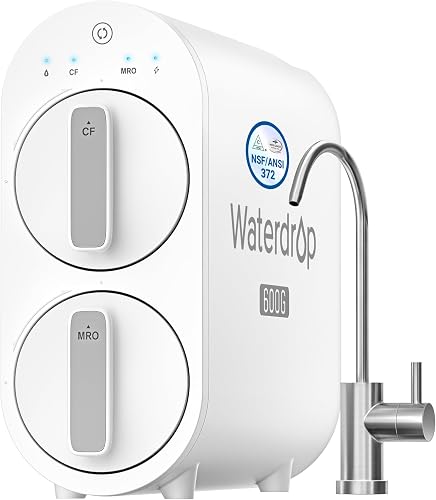
Quick verdict: which Waterdrop tankless RO should you buy?
Buy the G3P600 if your cabinet has room for its 18.12-inch length and you want the smart faucet. The G2P600 is the better fit when height is tight and a standard faucet is fine.
The G3P600 gets the nod overall because of the two features you touch every day. Its faucet shows water quality and filter life, and its 8-stage stack covers more of what tap water can carry.
The G2P600 is shorter at 14 inches tall. That 3.72-inch height gap matters when your cabinet has a low shelf or a shallow base.
If you are still deciding between a tank and a tankless design at all, read tank vs tankless reverse osmosis first. That choice changes your cabinet plan more than this pair does.
Waterdrop G2P600 vs G3P600 side by side
The two systems match on daily output and water waste, and split on filtration depth and faucet features. Here is how the specs line up.
| Feature | Waterdrop G3P600 | Waterdrop G2P600 |
|---|---|---|
| Daily capacity | 600 gallons | 600 gallons |
| Filtration stages | 8 | 7 |
| Pure to drain | 2:1 | 2:1 |
| Faucet | Silver smart display faucet | Faucet included |
| Size (L x W x H) | 18.12 x 5.67 x 17.72 in | 17.3 x 5.9 x 14 in |
| Weight | 15.4 lb | 25.4 lb |
| Power | Corded electric | Corded electric |
| Filter changes | Twist and pull, 3 seconds | Twist and pull, 3 seconds |
| Product | Best for | Capacity | Size (L x W x H) | Filtration stages | Our score |
|---|---|---|---|---|---|
| Waterdrop G3P600 | most kitchens | 600 gallons per day | 18.12 x 5.67 x 17.72 in | 8 | 8.8 |
| Waterdrop G2P600 | simpler setups | 600 gallons per day | 17.3 x 5.9 x 14 in | 7 | 8.2 |
The 2:1 ratio means both send one cup of waste water to the drain for every two cups of filtered water. That figure is the same on both units.
The G3P600's 8 stages are certified against NSF/ANSI 42, 58 and 372. Waterdrop lists reduction of TDS, chromium, PFAS, radium, fluoride, arsenic salt, iron, calcium, particles and chlorine among the results.
The G2P600 carries NSF/ANSI 372 certification for lead-free materials and uses 7 stages.
Flow rate and daily output
Both fill a cup in about 8 seconds, so neither wins on speed. Waterdrop rates the G3P600 at 8 seconds for an 8 oz cup and the G2P600 at 8 seconds for a 200 ml cup.
A 200 ml cup is roughly 6.8 oz. That small gap in cup size means the two rated flow figures are close but not identical in real terms.
Neither system will leave you waiting long at the sink. The bigger difference is the faucet, which tells you what is coming out.
Filtration stages and certifications
The G3P600's 8 stages and its wider certification set make it the stronger filter on paper. The G2P600 meets the core lead-free standard but has fewer stages.
Waterdrop's 8-stage stack on the G3P600 combines sediment and carbon blocks with the RO membrane. The carbon stages handle taste and chlorine, and the membrane handles dissolved solids.
The G2P600's 7 stages follow the same idea with one fewer layer. For most municipal water, the practical gap is smaller than the stage count suggests.
For water with more dissolved contaminants, the extra stage gives you more margin.
If filtration depth is your top priority rather than cabinet fit, the G3P600 wins this comparison. Our full Waterdrop G3P600 review walks through what those stages do at the tap.
Which system fits your cabinet?
The G2P600 is the easier fit under a low cabinet. It is 14 inches tall against the G3P600's 17.72 inches, and that 3.72-inch difference is the deciding number for many kitchens.
Cabinet depth is the other half of the fit question. The G3P600 is 18.12 inches long, while the G2P600 is 17.3 inches long.
The G2P600 also runs slightly wider at 5.9 inches against 5.67.
Measure your cabinet before you order either unit. Waterdrop asks buyers to confirm the cabinet is larger than the product, and that advice matters most on the G3P600's height.
The G3P600 in a full-size cabinet
A standard 24-inch base cabinet usually leaves enough room for the G3P600's height and length. The tankless shape still leaves most of the cabinet free for cleaning supplies and bulk goods.
The unit weighs 15.4 lb. Its lighter build than the G2P600 comes partly from the smaller water path and the separate faucet electronics.
Waterdrop says the design frees up over 70% of under-sink storage. That figure assumes you are replacing a tank system rather than installing from scratch.
The G2P600 in a tighter cabinet
The G2P600 suits a cabinet with a shallow depth or a low shelf. Its 14-inch height leaves more clearance above the unit for pipes and shutoff valves.
It weighs more at 25.4 lb. Plan the install so you are not lifting it into place alone if the cabinet is deep or the access is awkward.
Waterdrop says you can finish the install yourself in about 30 minutes. The twist-and-pull filter design means replacements take seconds without moving the system.
Which faucet and features matter day to day?
The G3P600's smart faucet is the feature you notice every time you fill a glass. The G2P600 keeps a simpler setup with filter life indicators only.
The G3P600's silver faucet shows a TDS readout so you can see the quality of the water coming through. A filter life tracker on the same display tells you when a replacement is due.
That display removes the guesswork of counting months or checking a sticker under the sink. You look at the faucet, and it tells you.
The G2P600 uses filter life indicators rather than a display faucet. You still get a reminder to replace the filter in advance, just without the live TDS number at the tap.
Filter changes on both units
Both units use the same twist-and-pull filter change, so upkeep is equally easy. Rotate the used filter counterclockwise, pull it out, and twist the new one clockwise into place.
Waterdrop lists this at 3 seconds without moving the system or reaching for tools. That matters on a tankless unit mounted in a tight cabinet.
The G3P600 also has an automatic flushing function. Waterdrop says this helps keep water fresh when the system has sat unused, which is useful if you travel or use the kitchen sink less on weekdays.
Installation and power needs
Both systems need a power outlet under the sink. Waterdrop notes the G3P600's electricity requirement directly, and the G2P600 is also a corded electric unit.
Plan the outlet before the install. If your cabinet has no socket, an electrician visit adds to the project cost and time for either system.
The G3P600 needs two drilled holes: one 1-inch hole for the RO faucet and one for the drain pipe connection. Account for that if you rent or have a stone countertop.
The G2P600 follows the same basic under-sink plumbing pattern. Waterdrop rates its self-install at about 30 minutes for a confident DIYer.
Water quality and certification: which one filters more?
The G3P600 covers more contaminants on paper thanks to its 8 stages and its NSF/ANSI 42, 58 and 372 certifications. The G2P600 meets the lead-free standard but lists fewer stages.
Waterdrop's G3P600 test data names TDS, chromium, PFAS, radium, fluoride, arsenic salt, iron, calcium, particles and chlorine among the reductions. It also cites reduction of chemicals such as vinyl chloride and ethylene glycol.
The G2P600's certification is for NSF/ANSI 372, which covers lead-free materials. Its 7 stages still include an RO membrane and carbon filtration, so it reduces TDS and improves taste.
If your water report shows PFAS or arsenic, the G3P600's extra stage and broader certification set give you more confidence. If your main goal is better-tasting water and fewer bottles, the G2P600 covers that need.
Neither unit is a water softener. Hard water minerals still pass through in part, so scale on kettles and faucets can continue on either system.
Waterdrop G2P600 vs G3P600: cost of ownership and upkeep
Both units save water at the same 2:1 ratio, and both use quick-change filters. The G3P600's 8-stage stack means more filter elements to track over time.
The 2:1 pure to drain ratio means both systems send one cup of waste water away for every two cups of filtered water. Waterdrop says the G2P600's design saves about 60% more water than a traditional RO purifier.
You can reuse the waste water for mopping, laundry or washing a car on either unit. That keeps the drain line useful rather than purely wasteful.
The G3P600's extra filtration stage adds one more cartridge to the replacement schedule. Factor that into the running cost over a few years, not just the first purchase.
Both use a twist-and-pull design, so you won't need tools or a service visit. Keep a spare filter on hand so a reminder on the faucet or indicator doesn't leave you without filtered water.
Who should buy the Waterdrop G3P600?
Buy the G3P600 if you have a full-size cabinet and want the smart faucet and deeper filtration. It is the better match for a family that fills glasses and cooking pots all day.
The 8-stage stack and the faucet display make it the stronger all-round system. Its 600 GPD capacity covers drinking, cooking and washing produce for a large household.
The G3P600 also suits anyone replacing a tank RO who wants to reclaim cabinet space. The tankless design leaves the cabinet free, and the smart faucet replaces the separate TDS meter some owners buy.
Skip it if your cabinet height is under about 18 inches or you have no under-sink outlet. In those kitchens the G2P600 fits more easily.
Who should buy the Waterdrop G2P600?
Buy the G2P600 if cabinet height is tight and you want a simple tankless system. Its 14-inch height clears low shelves that block the G3P600.
The 7-stage filtration and 2:1 drain ratio still deliver 600 GPD and better-tasting water. For a first tankless install or a smaller kitchen, that is enough.
The G2P600 suits renters and DIY installers who want a short, self-install project. Waterdrop rates the install at about 30 minutes, and filter changes take seconds.
Skip it if you want the TDS readout at the faucet or the broader certification set. Those are the reasons to move up to the G3P600.
If you are comparing Waterdrop against a different brand entirely, our Waterdrop vs Aquasana under sink water filter comparison covers that decision.
Which Waterdrop system is the better buy?
The G3P600 is the better buy for most kitchens. It wins the waterdrop g2p600 vs g3p600 comparison on filtration stages and faucet features while keeping the same 600 GPD output and 2:1 drain ratio.
The G2P600 is not a weak system. It is the smarter pick when your cabinet is shallow, when you want a shorter install, or when the smart faucet is not worth the extra height to you.
Here is the decision rule in plain terms. Pick the G3P600 if your cabinet fits 18.12 inches of length and 17.72 inches of height and you have an outlet.
Pick the G2P600 if height is under about 18 inches or you want the simpler faucet.
Before you order, measure the cabinet twice and confirm the outlet location. Then choose the unit that fits the space you actually have.
If a bigger tankless system is on your shortlist instead, our Waterdrop G3P800 vs X8 comparison covers the step-up models.
Frequently asked questions
Is the Waterdrop G3P600 better than the G2P600?
Yes for most kitchens. The G3P600 adds an 8th filtration stage and a smart faucet that shows TDS and filter life.
The G2P600 is shorter and easier to fit in a shallow cabinet, so it stays the better pick when depth is tight.
Do both Waterdrop systems make 600 gallons a day?
Yes. Both are rated at 600 gallons per day and both use a 2:1 pure to drain ratio.
Waterdrop rates the G2P600 at about 8 seconds for a 200 ml cup and the G3P600 at about 8 seconds for an 8 oz cup.
What is the size difference between the G3P600 and G2P600?
The G3P600 measures 18.12 x 5.67 x 17.72 inches. The G2P600 measures 17.3 x 5.9 x 14 inches.
The G3P600 is taller and longer, so measure cabinet height as well as depth before you buy.
Do either of these tankless RO systems need electricity?
Both are corded electric systems. Waterdrop notes that the G3P600 needs under-sink electricity, so check for an outlet before you plan the install.
The G2P600 also runs on corded electric power.
Which Waterdrop unit has the smart faucet?
The G3P600 includes a silver smart display faucet. Its TDS monitor shows filtered water quality and a filter life tracker shows when a replacement is due.
The G2P600 relies on filter life indicators instead.


