How Does a Reverse Osmosis System Work?
A reverse osmosis system works by pushing tap water through a semi-permeable membrane under pressure, which blocks most dissolved contaminants while letting water molecules pass. Prefilters catch sediment and chlorine first, and the water flows into a storage tank until you open the faucet.
On this page (9 sections)
- What are the main parts of a reverse osmosis system?
- How does the membrane remove contaminants?
- What do the different filter stages do?
- How does the storage tank fit into the process?
- Tank system vs tankless: which suits your kitchen?
- How does the system handle wastewater?
- Why does water pressure matter so much?
- How do you keep the system working well?
- What should you know before choosing a system?
A reverse osmosis system works by pushing tap water through a semi-permeable membrane under pressure. The membrane blocks most dissolved solids and contaminants while water molecules pass through, and a storage tank holds the treated water until you open the faucet.
That is the short answer to how does a reverse osmosis system work. The rest comes down to what happens before and after the membrane, and why a tank system behaves differently from a tankless one.
What are the main parts of a reverse osmosis system?
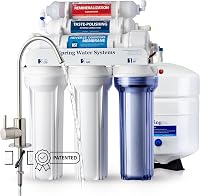
The main parts are prefilters, the RO membrane, a storage tank, and a faucet. Water flows through them in order, and each part does a different job in the chain.
Most under-sink systems stack several cartridges in a row. A sediment filter catches sand and rust first.
A carbon block or granular carbon stage pulls out chlorine and taste compounds. Then the water reaches the membrane housing.
After the membrane, a final carbon filter polishes the taste. Some systems add a remineralization stage that puts calcium and magnesium back into the water.
A shutoff valve stops production when the tank fills, and a check valve keeps treated water from flowing backward.
The APEC ROES-50 bundles a five-stage chain into one cabinet, along with a tank, a brushed nickel faucet and an installation kit. Its filters are meant to be replaced every 6 to 24 months, depending on what comes in with your tap water.
How does the membrane remove contaminants?
The membrane removes contaminants by acting as a sieve with pores far smaller than most dissolved particles. Water is forced against it under household pressure, and the push drives water molecules through while larger particles stay behind.
The membrane is a thin polymer sheet rolled into a spiral around a central tube. Feed water enters one end and travels along the sheet.
Clean water collects in the tube, and the leftover concentrate washes out to the drain.
Because the pores are so small, the membrane rejects dissolved salts, heavy metals and many organic compounds. APEC says its ROES-50 removes up to 99.99% of impurities, and its fifth stage targets arsenic, lead and fluoride among more than 1,000 contaminants.
These are the brand's claims for its filter set.
A membrane cannot do the whole job alone. Chlorine damages the polymer, so carbon prefilters remove it first.
That is why the order of stages matters as much as the membrane itself.
What do the different filter stages do?
Each filter stage does a specific job. Sediment traps particles, carbon handles chlorine and taste, the membrane removes dissolved solids, and a final stage polishes the water.
More stages mean more jobs handled before the membrane sees the water.
A common five-stage layout looks like this:
- Sediment filter: catches sand, rust and silt.
- Carbon block: removes chlorine, odors and some organic chemicals.
- Second carbon stage: more chlorine removal and taste improvement.
- RO membrane: rejects dissolved solids and metals.
- Post-carbon filter: final taste polish before the tank.
Six-stage systems add a remineralization cartridge. The iSpring RCC7AK-BN uses that sixth stage to raise pH and add minerals, and it also has a transparent first-stage housing so you can see when sediment has built up. iSpring says the system reduces TDS by 93 to 98% and removes more than 1,000 contaminants across its stages.
How does the storage tank fit into the process?
The storage tank holds treated water under pressure so the faucet delivers a steady flow without waiting for the membrane. A bladder inside separates the water from a pocket of air, and that air pushes water out when you open the tap.
A tank also lets the system run in batches. The membrane produces water slowly, often less than a gallon an hour on a 50 GPD unit.
The tank collects that trickle so you can fill a pot when you need it.
When the tank is full, a pressure switch shuts off the feed. As you draw water, pressure drops and the system restarts.
This on-off cycle is normal and helps the membrane last longer.
Tank capacity is usually listed as a total, but usable water is lower because some stays in the bladder. The iSpring T32M lists up to 3.2 gallons of holding capacity in a metal tank with a food-grade butyl diaphragm.
It is pre-pressurized between 7 and 10 psi and works vertically or horizontally.
Tank system vs tankless: which suits your kitchen?
A tank system stores water and delivers it fast, while a tankless system makes water on demand and takes up less cabinet space. The right choice depends on how much space you have and how you use water.
Tank systems are the traditional design. They give you a few gallons ready to pour and cost less up front in most cases.
The trade-off is the cabinet footprint: the APEC ROES-50 measures about 15.5 by 5.25 by 17 inches for the system, plus a separate tank.
Tankless systems skip the tank and push water straight to the faucet. They suit tight cabinets and homes that want a constant supply.
Flow rate can be slower at the tap, though, because there is no reserve.
If you are comparing models for a normal kitchen, our guide to the best reverse osmosis system for home walks through the trade-offs. A tank design is still the easier fit for most families.
When is a tank the better fit?
A tank is better when you fill pots, pitchers and coffee makers in a hurry. The stored water means you are not waiting on the membrane every time.
Tank systems also handle interruptions better. If the power or water supply pauses, the tank still holds treated water.
That reserve is useful in a busy kitchen.
Choose a tank system if your cabinet has room and you want a familiar design with easy filter changes. The ROES-50 fits that profile with quick-connect fittings and color-coded tubing for a DIY install.
When does tankless make more sense?
Tankless makes sense when cabinet space is tight or you want water made fresh on demand. It also avoids the small amount of water that sits in a tank between uses.
Tankless units usually need a power source for the pump and controls. Check that you have an outlet under the sink before you plan the install.
If your priority is a compact footprint, a tankless model is the pick. If you want the lowest cost and the fastest pour, stay with a tank.
How does the system handle wastewater?
The system sends wastewater, called concentrate or brine, down the drain. The membrane cannot pass dissolved solids, so they are flushed away with part of the feed water.
This is normal for reverse osmosis.
The ratio of wastewater to treated water varies. Older systems often send 3 to 4 gallons to the drain for every gallon made.
Newer designs reduce that, and some recirculate concentrate to save water.
Wastewater is the main reason RO systems get criticism for efficiency. A tank system that runs in batches uses less than one that runs constantly.
If water use matters to you, compare the wastewater ratio when you shop.
You can also capture reject water in a bucket for plants or cleaning. It is not drinking water, but it is fine for many household uses.
Why does water pressure matter so much?
Water pressure matters because the membrane needs a steady push to separate water from contaminants. Too little pressure slows production; too much can damage parts.
The APEC ROES-50 lists an operating pressure range of 40 to 85 psi.
If your home pressure runs low, the system will make water slowly and may need a booster pump.
Pressure also affects how much water ends up as wastewater. Higher pressure pushes more water through the membrane, which can improve the ratio.
Check your pressure with a gauge before you buy. A simple test at the kitchen faucet tells you whether your system will run in its comfort zone.
How do you keep the system working well?
Keep the system working by changing prefilters on schedule and watching flow and taste. A slow faucet or flat-tasting water usually means a filter is spent.
Change sediment and carbon filters every 6 to 12 months in typical use. Replace the membrane less often, often every 2 to 3 years.
The APEC filter set is rated for 6 to 24 months, so follow the brand's guidance for your water.
Sanitize the tank and lines when you change filters, and check for leaks at the fittings. A small drip under the sink can damage cabinets long before you notice it.
How long the whole system lasts depends on water quality and care. Our guide to how long do reverse osmosis systems last covers the signs that a unit is near the end of its run.
What should you know before choosing a system?
Before you choose, know what your water contains and how much space your cabinet has. A system tuned to your water problems will serve you better than a generic pick.
If nitrates are the concern, look for a membrane rated for them. Our roundup of the best reverse osmosis system for nitrates covers models built for that job.
If budget drives the decision, a compact five-stage unit can do the basics well. See the best reverse osmosis system under 300 for options in that range.
For most kitchens, a tank system with a five-stage chain is the sensible starting point. It balances cost, space and water quality without asking you to relearn how to use a faucet.
The APEC ROES-50 fits that brief, while the iSpring RCC7AK-BN adds remineralization if you dislike the taste of stripped water. That is how a reverse osmosis system works: prefilters protect the membrane, the membrane does the separating, and the tank holds the result until you turn the tap.
Frequently asked questions
How much water does a reverse osmosis system waste?
Older systems often send several gallons of reject water down the drain for every gallon they make. Modern tank systems use less, and some route reject water back to the supply; the exact ratio depends on the model and your water pressure.
Why does RO water taste flat?
The membrane strips out minerals like calcium and magnesium along with contaminants, which leaves the water tasting bland. Remineralization stages, like the one on the iSpring RCC7AK-BN, add minerals back so the water tastes closer to bottled spring water.
Can a reverse osmosis system remove bacteria and viruses?
A standard RO membrane has pores small enough to block many bacteria and protozoa, but it is not a sterilizer. Health agencies still recommend a separate disinfection step, such as UV light or chlorination, when treating water from an unknown source.
Does an RO system need electricity?
No, most under-sink RO systems run on household water pressure alone. The system needs enough pressure to push water across the membrane, so low-pressure homes sometimes add a small booster pump.
How often do RO filters need replacing?
Sediment and carbon prefilters typically last 6 to 12 months, while the RO membrane often lasts 2 to 3 years. Change filters sooner if water quality drops or your flow slows, and follow the schedule the brand recommends for your model.