How Do Under Sink Water Filters Work?
Under sink water filters work by connecting to the cold water line under your cabinet and pushing tap water through one or more filter stages before it reaches the faucet. Carbon and sediment stages trap chlorine, taste, odor and particles, while a reverse osmosis membrane also strips dissolved solids like lead and fluoride.
On this page (9 sections)
- What parts make up an under sink water filter?
- How does a carbon filter stage clean water?
- How does a reverse osmosis membrane work?
- What does each filter stage actually do?
- How does water flow through the system?
- What do under sink filters remove and what do they leave behind?
- How long do the filters last, and how do you change them?
- Is an under sink filter worth it compared with a whole house system?
- Which type of under sink filter fits your water?
Under sink water filters work by tapping the cold water line under your cabinet and running tap water through one or more filter stages before it reaches the faucet. Carbon and sediment stages trap chlorine, taste, odor and particles, while a reverse osmosis membrane also strips dissolved solids like lead and fluoride.
The basic idea is simple: water follows the same pipe it always did, but now it passes through filter media first. How many stages it crosses, and what those stages are made of, decides what ends up in your glass.
That is the whole answer to how do under sink water filters work, and the rest is detail.
What parts make up an under sink water filter?
Every under sink system has a water supply connection, at least one filter stage, and a dedicated faucet or outlet. Water enters from the cold line, moves through the cartridge or cartridges, and exits at the tap.
A feed line usually branches off the cold supply with a saddle valve or a tee. The cartridge housing holds the filter media, and the treated water then runs to a separate faucet drilled into the counter or to the existing tap.
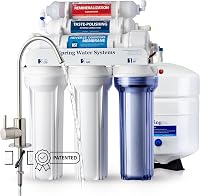
Reverse osmosis systems add three parts: a storage tank, a drain line and often a booster pump. The tank holds treated water under pressure so the faucet delivers a steady stream instead of a trickle.
The drain line carries away the concentrated waste water the membrane rejects.
Sediment-only and carbon inline filters skip the tank entirely. They are compact cylinders that connect directly in line with the faucet supply, which is why they fit in tight cabinets.
How does a carbon filter stage clean water?
Carbon works by adsorption: the porous media grabs chlorine, taste and odor compounds as water flows past. The huge internal surface area of a carbon block gives contaminants plenty of places to stick.
Water passes through a sediment wrap first, which catches sand and rust so the carbon doesn't clog early. It then moves through the carbon block, where chlorine and many organic chemicals bind to the surface.
Some stages use coconut shell carbon for a cleaner taste.
KDF media, a copper and zinc blend, often sits with the carbon to help with chlorine and heavy metals. That combination is what the CuZn UC-200 uses, pairing KDF-55 with coconut shell carbon and a micro sediment membrane.
Carbon does not remove dissolved minerals, so the water keeps its natural taste. It also leaves fluoride and most nitrates in place, which is why people who want those gone step up to a membrane system.
How does a reverse osmosis membrane work?
Reverse osmosis pushes water through a semi-permeable membrane that blocks dissolved contaminants while letting water molecules pass. Household water pressure, or a pump, forces the water across the membrane.
The membrane's pores are tiny, so lead, fluoride, arsenic and many heavy metals cannot squeeze through. Most of the water continues to the storage tank as permeate, while a smaller share carries the concentrated impurities to the drain.
Because the membrane is delicate, RO systems put prefilters in front of it. Sediment and carbon stages protect the membrane from chlorine damage and grit.
A final carbon stage polishes the taste before the water leaves the tank.
The APEC ROES-50 uses this five-stage layout and rates its output at 50 gallons per day. APEC says the stages remove up to 99.99% of impurities, including lead, fluoride, arsenic and heavy metals.
Treat that as APEC's claim rather than a guarantee for every water supply.
What does each filter stage actually do?
Each stage has one job, and the order matters. A typical five-stage RO system runs like this.
- A sediment prefilter catches sand, rust and silt.
- A carbon prefilter reduces chlorine so the membrane isn't damaged.
- The RO membrane removes dissolved contaminants.
- A second carbon stage polishes taste and odor.
- An optional final stage adds mineral or taste refinement.
Inline carbon systems compress this into one or two stages. They skip the membrane and rely on carbon and KDF to improve taste and reduce chlorine and some metals.
That's why they keep beneficial minerals and don't lower TDS.
Knowing the stage count helps you compare systems honestly. More stages usually mean more protection for the membrane and a longer service life, not automatically cleaner water for every contaminant.
How does water flow through the system?
Water moves in a one-way path from the cold supply to your glass, with a valve or faucet controlling the flow. When you open the tap, pressure pushes water through the filters.
In an RO system, treated water collects in a pressurized tank. Opening the faucet releases it, and the system refills the tank as you use water.
The drain line runs continuously while the unit is making water.
Inline filters have no tank, so flow depends on your home's water pressure. A slow trickle at the faucet often means a clogged cartridge or low supply pressure rather than a broken filter.
Most systems include a shutoff valve so you can stop the feed before changing cartridges. That valve is the first thing to close during any maintenance.
What do under sink filters remove and what do they leave behind?
What a filter removes depends on its media, not its size. Carbon handles chlorine, taste and odor, while a membrane handles dissolved metals and minerals.
Sediment stages catch particles you can see. Carbon and KDF stages reduce chlorine, some pesticides and heavy metals like lead.
RO membranes go further and reduce fluoride, arsenic, nitrates and total dissolved solids.
No single stage removes everything. That's why systems combine media and why a carbon-only filter won't match an RO system on dissolved contaminants.
Check the certification and reduction list for the exact model you're considering.
Well water changes the picture, since sediment and bacteria load can be much higher. Our guide to the under sink water filter for well water covers which systems handle that challenge.
How long do the filters last, and how do you change them?
Filter life varies by media and water quality, from about 6 months for carbon stages to several years for long-life inline units. Changing them on schedule keeps flow and water quality steady.
RO prefilters often run 6 to 12 months, and the membrane typically lasts 2 to 3 years. Inline carbon systems can stretch much longer.
CuZn says the UC-200 lasts up to 5 years or 50,000 gallons, depending on incoming water quality.
Most cartridges twist or pull out, and push-fit fittings make the swap quick. Shut off the feed, release pressure at the faucet, and have a towel ready for drips.
Our walkthrough on how to change under sink water filter covers the steps in order.
The Waterdrop 2PPGCCT pack bundles two PP stages, one GC and one CT filter for the WD-TSA and WD-TSB systems. The PP filters are rated for 6 months, the GC for 12 and the CT for 18.
Is an under sink filter worth it compared with a whole house system?
An under sink filter treats only drinking water, while a whole house system filters every tap in the home. For most people, the under sink unit is the better value because drinking and cooking water matter most.
Whole house filters protect pipes and appliances from sediment and chlorine, but they use larger cartridges and cost more upfront. An under sink system is compact, easy to install and cheaper to maintain.
If you mainly care about the water you drink, an under sink filter is the simpler choice. If your goal is to protect the whole plumbing system or you have hard water issues throughout the house, compare the two directly in our whole house water filter vs under sink breakdown.
Either way, the working principle is the same: water passes through media that trap or adsorb contaminants before it reaches the tap.
Which type of under sink filter fits your water?
Match the filter type to what's in your water and what you want removed. Carbon is enough for taste and chlorine, while RO is the better fit for dissolved metals and fluoride.
If you have well water or very hard water, choose a system with strong prefilters and check whether it reduces the contaminants you care about. If you only want better-tasting tap water and want to keep the minerals, an inline carbon filter is the simpler pick.
The CuZn UC-200 runs three stages, pairs KDF-55 with coconut shell carbon, and keeps beneficial minerals in the water. It's a practical fit for renters or anyone who doesn't want a tank and drain line under the cabinet.
If lead, fluoride or arsenic are the concern, go with the RO system instead. Before spending, weigh the running costs and installation effort in our guide on are under sink water filters worth it.
Whatever you choose, the answer to how do under sink water filters work stays the same. Your tap water takes one extra pass through a filter before it reaches your glass, and the media in that filter decides what comes out.
Frequently asked questions
Do under sink water filters need electricity?
Only reverse osmosis systems need power, because a pump or pressure switch drives water across the membrane. Carbon block, KDF and sediment-only filters are passive and run on household water pressure alone, so they keep working during a power cut.
How often do under sink filter cartridges need changing?
It depends on the filter type and your water. Carbon stages often run 6 months, while long-life inline systems can go up to 5 years.
RO membrane and prefilter schedules vary, so follow the maker's interval and shorten it if your water is hard or sediment-heavy.
Will an under sink filter remove fluoride?
Only some do. Standard carbon filters leave fluoride in the water, while reverse osmosis membranes and dedicated fluoride-reducing media remove most of it.
Check the certification and reduction claims for the specific system before you buy.
Can I install an under sink water filter myself?
Yes, most systems are DIY friendly and use push-fit connections on the cold water line. You need basic tools, a shutoff valve and cabinet space.
RO systems add a tank and drain line, so plan the layout before you start.
Does an under sink filter reduce TDS?
Carbon and KDF filters do not lower total dissolved solids, so the mineral content stays similar. A reverse osmosis system does reduce TDS by forcing water through a semi-permeable membrane that blocks dissolved salts and metals.