Do All Reverse Osmosis Systems Require Power?
No. A basic tank-based reverse osmosis system runs on water pressure alone and needs no electricity. Power only comes into play when a pump is added or when the system is tankless.
On this page (9 sections)
- What makes a reverse osmosis system need power?
- How do tank-based RO systems work without electricity?
- When does a reverse osmosis system need to be plugged in?
- How can you tell whether a system needs an outlet?
- What happens to an RO system during a power outage?
- Do booster pumps change the power answer?
- Which system should you pick if power is a concern?
- What else should you know about power and RO?
- So, do all reverse osmosis systems require power?
No. A basic tank-based reverse osmosis system runs on water pressure alone and needs no electricity.
Power only comes into play when a booster pump is added or when the system is a tankless design. That distinction matters if you're shopping for an RO system for home or planning around power outages.
The answer to "do all reverse osmosis systems require power" is really about which parts move the water.
What makes a reverse osmosis system need power?
Only the parts that push or control water need electricity. A standard RO system uses the pressure already in your pipes to force water through the membrane, so the filtration itself is passive.
The tank stores treated water until you open the faucet.
Stored pressure delivers it, which is why these systems keep working when the grid goes down.
Power comes in when something has to run a motor or read a sensor. That means a booster pump on a low-pressure line, or a tankless unit with a pump and electronic controls built in.
So the real question is not whether RO needs power in general. It's whether the specific system you pick includes a pump or electronics.
How do tank-based RO systems work without electricity?
They rely on your home's water pressure to drive water across the membrane. Municipal supply typically arrives at 40 to 80 psi, which is enough for most RO membranes to work.
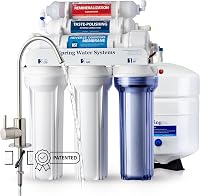
Water passes through the pre-filters and the membrane, and the treated water collects in a pressurized storage tank.
A shutoff valve stops the flow once the tank is full.
When you open the faucet, air pressure in the tank pushes water out. No outlet, no circuit board, no pump.
The system is quiet because there's nothing to run. This is the classic design sold for decades, and it's why many RO tank systems fit homes where an outlet under the sink is awkward or missing.
When does a reverse osmosis system need to be plugged in?
A system needs power when it has a booster pump or a tankless design. Both use electricity to improve pressure or manage flow, and both stop working when the outlet loses current.
Tankless units are the most common example.
They skip the storage tank, so they pump and filter on demand.
The Waterdrop T3-C is one: it's rated at 450 GPD and requires an electrical connection to operate. A pump on a tank system is the other case.
It's added when feed pressure is too low for the membrane to hit its rated output. The pump raises input pressure, and that pump needs a transformer and a power source.
Either way, the electricity serves the machinery, not the membrane. The filtering chemistry is the same.
How can you tell whether a system needs an outlet?
Read the flow rating and look for a pump or a tank in the description. A pressure-driven tank system has a storage tank and no motor, so it runs without a cord.
If the product is described as tankless or plug-in, expect a cord.
The Waterdrop T3-C spells it out: "Plug-in Required" in its title, and its feature notes confirm the electrical connection.
If a booster pump is listed as part of the system or as a required add-on, that's another sign. Pump kits include a transformer, so the setup needs a nearby outlet.
When in doubt, count the parts that move. A tank and a faucet with no motor means no power.
A pump or an electronic board means power.
What happens to an RO system during a power outage?
A pressure-driven tank system keeps filtering and keeps its stored water. A pump or tankless unit stops when the current drops.
For a passive system, water keeps trickling through the membrane as long as supply pressure holds.
The tank fills slowly, and the water already stored stays available for drinking.
A plugged-in system has no such fallback. The pump stops, and a tankless unit stops filtering entirely.
Whatever water sits in the lines is all you get. If outages are common where you live, this is a real buying factor.
A tank system without a pump gives you a quiet, outage-proof supply. A tankless unit trades that for a smaller footprint and on-demand flow.
Do booster pumps change the power answer?
Yes, in a practical sense: a pump turns a passive system into one that needs electricity. The pump itself needs a transformer, and the iSpring PMP5 doesn't include one.
Pumps exist to fix low pressure.
If your feed pressure sits at 15 to 50 psi, a pump can raise input pressure so the membrane produces closer to its rated gallons per day.
The iSpring PMP5 is rated for 75 and 100 GPD systems and uses a 24 volt supply. The Aquatec 8800 kit is the larger option.
It's built for systems up to 200 GPD and includes a transformer, a pressure switch and reducer fittings, so it's more of a complete package than a bare pump. Both need an outlet, and both stop when power stops.
If you'd rather keep the system passive, don't add a pump; accept the slower output your pressure allows.
Which system should you pick if power is a concern?
Pick a tank-based system without a pump if you want filtration that runs without electricity. It's the simplest match for outages, cabins and spots with no outlet under the sink.
Pick a tankless or pump-equipped system if you want faster flow, a smaller footprint or help with weak pressure.
You're choosing performance and convenience over outage-proof operation.
For low-pressure homes, a pump is often worth it. Compare the iSpring PMP5 booster pump against the larger Aquatec kit and match the rating to your system's GPD.
Whichever way you go, expect filters to need replacing over time. Our guide to how long reverse osmosis systems last covers how filter life and maintenance affect the decision.
When does a booster pump make sense?
Choose the iSpring PMP5 when you have a 75 or 100 GPD system and weak feed pressure. It's a 24 volt pump with 1/4 inch fittings and an inlet pressure range of 15 to 50 psi.
The transformer isn't included, so budget for one and check that your system can take a pump. A pressure switch and shutoff valve are also separate.
When is the Aquatec kit the better buy?
Choose the Aquatec 8800 kit when you want a complete pump package and your system is under 200 GPD. It includes the pump, a transformer, a pressure switch and reducer fittings for 1/4 or 3/8 inch tubing.
It raises input pressure from 30 to 40 psi up to 60 to 80 psi. It runs automatically, switching off when the tank is full and back on when you draw water.
The kit doesn't include an optional shutoff solenoid, so it relies on your system's existing mechanical valve. For most setups that works fine.
What else should you know about power and RO?
Check the outlet location before you install anything. A tankless unit or pump needs a live outlet within reach of its cord, and adding one may mean an electrician.
Think about the drain, too.
RO systems send wastewater to the drain, and tankless units with a 2:1 pure-to-drain ratio like the T3-C still need a drain connection.
If you're also weighing water quality extras, an alkaline RO system adds a remineralization stage, which often means one more component to plan around. Finally, decide what matters more: passive reliability or on-demand performance.
That single choice answers most of the power question for your kitchen.
So, do all reverse osmosis systems require power?
No. Many tank-based RO systems run on water pressure alone and need no electricity at all.
The systems that require power are the ones with a booster pump or a tankless design. If you want outage-proof filtration, choose a passive tank system.
If you want faster flow, a smaller footprint or help with low pressure, choose a pump or a tankless unit and make sure you have an outlet under the sink.
Either way, the answer to "do all reverse osmosis systems require power" depends on the parts, not the brand. Check for a tank or a pump before you buy, and the power question answers itself.
Frequently asked questions
Why do some under-sink RO systems plug in?
They either use a booster pump to raise low feed pressure or are tankless designs that run on electronics. Pumps help systems on weak municipal or well pressure, while tankless units need power for the pump, sensors and automatic flushing.
Can I add a booster pump to my existing RO system?
Often yes, if the system is designed for one and the pump matches its flow rating. A kit usually includes a transformer and pressure switch, but some pumps need separate accessories.
Check the fitting size and gallon-per-day rating before buying.
Will an RO system without power still work during an outage?
A pressure-driven tank system will keep filtering and storing water as long as supply pressure holds. A plugged-in pump or tankless unit stops when the power goes out.
If outages matter, a tank-based system without a pump is the simpler choice.
Does a reverse osmosis system use a lot of electricity?
A system without a pump uses none. A booster pump draws only a small amount while it runs, and tankless units add a little more for their controls.
The bigger factor for most homes is water waste, not the electricity draw.